Key Takeaways
- How Supplier System Integration improves coordination between procurement platforms, supplier portals, ERP systems, finance tools, and risk systems
- Why supplier data exchange must support onboarding, pricing, purchase orders, invoices, certifications, and performance records
- How vendor system connectivity reduces manual handoffs across procurement, finance, operations, and supplier management teams
- Why supplier onboarding integration depends on validation, governance, auditability, lineage, and access controls
- How structured integration pipelines reduce supplier delays, duplicate records, compliance gaps, and procurement process fragmentation
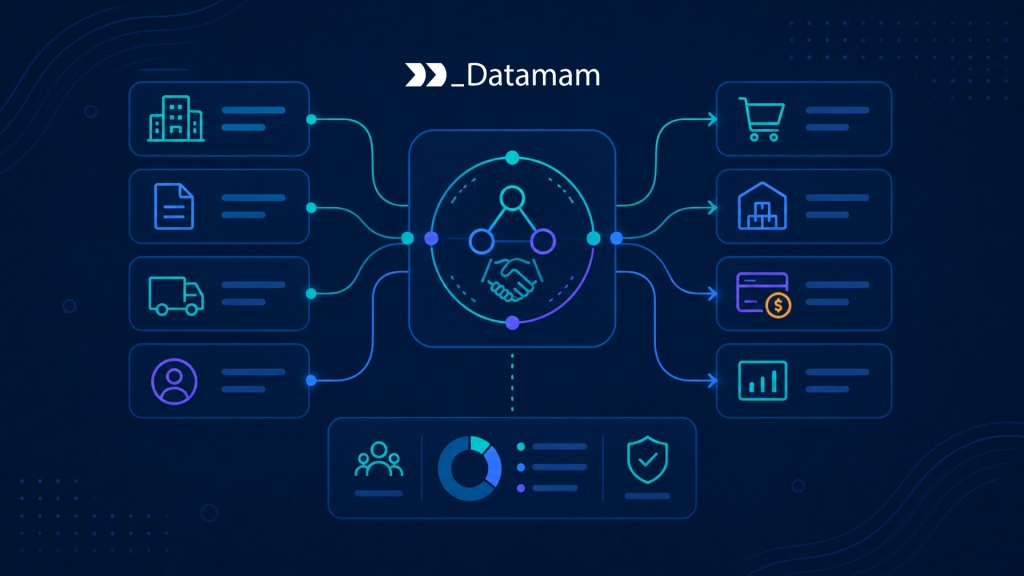
Supplier relationships increasingly depend on connected systems, not only negotiated contracts. Procurement teams need supplier records, onboarding documents, pricing files, purchase orders, certifications, delivery updates, invoices, compliance evidence, risk alerts, and performance metrics to move reliably across internal and external platforms. When supplier systems are disconnected, buyers rely on email, spreadsheets, portal downloads, and manual status checks. Supplier System Integration gives procurement, finance, operations, legal, and supply chain teams a structured way to coordinate supplier data exchange, reduce onboarding friction, and improve procurement system integration across the supplier lifecycle.
The Supplier Coordination Gap Across Procurement Systems
Supplier coordination is often more fragmented than procurement leaders expect. A supplier may exist in the ERP vendor master, the procurement platform, the contract lifecycle system, the risk management tool, the accounts payable platform, and several business-unit spreadsheets. Each system may hold a different supplier name, address, tax profile, category, contact, contract status, risk rating, or onboarding stage. This coordination gap matters because procurement must increasingly manage supplier relationships with stronger digital controls, resilience planning, and governance discipline. NIST SP 800-161 Rev. 1 is a strong reference for supply chain risk management because it focuses on identifying, assessing, and mitigating cybersecurity risks across supply chains.
Why Supplier Data Fragments Across the Enterprise
Supplier data fragments because different teams interact with suppliers for different reasons. Procurement creates supplier profiles for sourcing and purchasing. Finance creates vendor records for payment. Legal manages contract documents. Compliance collects certifications and due diligence evidence. Operations tracks delivery performance. Risk teams monitor sanctions, cybersecurity, ESG, and continuity indicators.
Each team may use its own workflow and system of record. As a result, supplier profiles drift over time. A supplier may be approved in procurement but blocked in finance. A contract may be active in the legal system but missing from the purchasing platform. A supplier may change bank details in accounts payable while procurement still uses outdated contact information. Supplier System Integration reduces this fragmentation by creating controlled data flows across systems.
How Disconnected Supplier Systems Affect Procurement Execution
Disconnected supplier systems create practical delays. A buyer may be unable to issue a purchase order because vendor onboarding is incomplete. Finance may delay payment because tax or banking information is missing. Compliance may require updated certifications after a supplier has already been selected. Operations may not see supplier delivery risk until after a shipment is late.
Consequently, procurement system integration becomes more than back-office automation. It improves the speed and reliability of supplier coordination. When data moves consistently across procurement, ERP, finance, and supplier management tools, teams can make faster decisions with fewer manual checks. Data integration solutions for order management are essential in achieving seamless operations. They enable businesses to streamline processes and enhance communication between teams. By ensuring accurate and timely data flow, organizations can significantly reduce delays and improve overall efficiency.
Supplier System Integration as an Operating Layer
Supplier System Integration becomes valuable when it operates as a governed layer between internal procurement systems and external supplier workflows. The goal is not simply to connect one portal to another. The goal is to create a trusted flow of supplier data that supports onboarding, purchasing, contract management, payment, compliance, and performance monitoring. OpenPeppol is a useful reference for procurement interoperability because it supports standardized electronic procurement document exchange across organizations and jurisdictions.
This operating layer should define which systems own supplier fields, which updates require approval, which data can be exchanged automatically, and which exceptions require human review. In practice, supplier integration must support both efficiency and control. Procurement teams need speed, while finance, legal, and compliance teams need evidence.
Defining Source Ownership Across Supplier Data Domains
Source ownership is the foundation of reliable supplier data exchange. The ERP system may own vendor ID, payment terms, tax fields, legal entity name, and bank validation status. The procurement platform may own sourcing categories, buyer assignment, supplier status, and purchase eligibility. The contract system may have agreement terms, renewal dates, and obligations. Risk systems may own sanctions checks, cyber risk scores, and compliance status.
Clear ownership prevents conflicting updates. For example, a supplier contact change may originate in a supplier portal, but bank account changes should require finance approval before they affect payment systems. A category update may be owned by procurement, while legal name changes may require tax and compliance review. Integration rules should reflect these business controls.
Creating a Shared Supplier Record Across Systems
A shared supplier record does not mean every system must store identical data. Procurement, finance, legal, and operations each need different views of the supplier relationship. However, they need consistent identifiers and relationships. A supplier may have a parent company, local subsidiaries, manufacturing sites, distribution partners, and multiple tax entities.
Supplier System Integration should connect these records through a common supplier identity model. This allows teams to understand whether two records represent the same vendor, related entities, or separate suppliers. Without this model, procurement may underestimate supplier concentration, finance may duplicate vendor records, and risk teams may miss exposure across subsidiaries.
Connecting Supplier Onboarding Integration to Procurement Workflows
Supplier onboarding integration is one of the most important use cases because onboarding delays affect sourcing speed. A supplier may need to provide tax documents, bank information, certifications, insurance evidence, security questionnaires, diversity status, ESG declarations, contract approvals, and compliance attestations before procurement can issue orders.
Integrated onboarding connects these steps to downstream purchasing workflows. Procurement can see whether a supplier is approved, conditionally approved, blocked, or pending review. Finance can confirm payment readiness. Compliance can track missing evidence. Buyers can avoid selecting suppliers that are not ready for purchase order issuance.
Infrastructure Requirements for Supplier Data Exchange
Supplier data exchange depends on an infrastructure that can collect, validate, synchronize, monitor, and govern supplier information across systems. The objective is not simply to move data faster. Procurement teams need accurate, approved, and traceable supplier data that can support sourcing, ordering, payment, reporting, and risk management. ISO 20400 is a strong procurement governance reference because it provides guidance on integrating sustainability considerations into procurement decisions and processes.
This is especially important when supplier data influences purchasing authority, payment readiness, compliance status, and operational continuity. A supplier integration program should therefore include data quality controls before records are pushed into procurement, ERP, finance, or reporting systems.
Controlled Intake from Supplier Portals and Internal Systems
Supplier information may be entered through supplier portals, ERP systems, procurement platforms, contract lifecycle systems, risk tools, AP automation platforms, EDI networks, APIs, spreadsheets, and document uploads. Controlled intake ensures that data is captured with source, timestamp, validation status, approval state, and responsible owner.
Apache Airflow can orchestrate scheduled data movement between procurement, ERP, risk, and finance platforms. Kafka can support event-driven updates when supplier status, purchase eligibility, bank validation, or compliance flags need faster downstream visibility. Controlled intake helps prevent unmanaged supplier updates from bypassing approval workflows.
Normalizing Supplier, Contract, Category, and Payment Data
External and internal supplier data is rarely consistent in raw form. Supplier names may include abbreviations, local language variations, legal suffixes, or subsidiary references. Addresses may be formatted differently across jurisdictions. Categories may use different taxonomies across procurement and ERP. Contract identifiers, payment terms, and tax fields may be incomplete or inconsistent.
Normalization aligns supplier entities, legal names, tax identifiers, locations, categories, payment terms, contract references, banking status, and onboarding stages. Spark can support high-volume supplier and transaction processing, while dbt can manage repeatable transformation logic and documentation. This allows procurement teams to compare supplier data accurately across systems.
Validating Supplier Data Before Operational Use
Validation controls prevent risky data from entering procurement and payment workflows. These controls should check duplicate supplier records, missing tax fields, invalid addresses, expired certifications, incomplete contracts, blocked payment status, sanctions review gaps, missing banking approvals, and conflicting supplier identities.
Validation should occur before supplier records are published into ERP, procurement, AP, or reporting systems. Data quality frameworks such as Great Expectations can support rule-based checks for completeness, uniqueness, accepted values, and cross-system consistency. Without validation, integration can accelerate errors instead of reducing them.
Technology Stack Behind Supplier System Coordination
Supplier coordination requires a technology stack that supports data movement, transformation, monitoring, storage, and governance. The stack must handle structured data such as supplier IDs and purchase orders, semi-structured data such as questionnaires, and document-based data such as certifications, contracts, insurance records, and tax forms. GS1 standards are relevant in supplier and product data environments because standardized identifiers and data exchange models help trading partners improve consistency across supply chain processes.
A mature integration environment connects procurement, ERP, finance, risk, contract, and supplier-facing systems into repeatable workflows. It should reduce manual coordination without removing controls needed for supplier approval, payment safety, and compliance.
Orchestration and Connectivity Using Airflow, Kafka, APIs, and EDI
Supplier system workflows may use APIs, EDI, secure file transfer, webhooks, portals, and middleware connectors. Airflow can coordinate recurring batch workflows for supplier updates, document checks, purchase order synchronization, and risk data refreshes. Kafka can support event-based data movement when supplier status, risk flags, or order updates change.
EDI remains relevant in supplier coordination for purchase orders, acknowledgments, advance shipment notices, and invoices. APIs are often more flexible for modern procurement platforms and supplier portals. The integration architecture should support both, because large supplier ecosystems usually include suppliers with different digital maturity levels.
Processing and Transformation Through Spark, dbt, and Procurement ETL Pipelines
Processing layers convert raw supplier inputs into structured procurement datasets. Spark can process large supplier masters, purchase orders, invoice records, contract metadata, risk records, and performance data. dbt can manage standardized transformation models for supplier identity, onboarding status, category mapping, and procurement analytics.
Procurement ETL and ELT pipelines can resolve supplier identities, classify spend categories, map supplier hierarchies, align contract references, standardize payment terms, and connect onboarding status to purchasing eligibility. This makes supplier data exchange repeatable rather than dependent on manual spreadsheet reconciliation. Enterprise data integration solutions are essential for organizations looking to enhance their data accuracy and accessibility. By implementing these solutions, businesses can ensure that all data sources are harmonized, allowing for more informed decision-making. This streamlined approach not only improves operational efficiency but also supports better collaboration across various departments.
Storage, Analytics, and Governance in Snowflake, BigQuery, or Databricks
Snowflake, BigQuery, and Databricks can support integrated supplier intelligence layers where procurement, finance, compliance, and operations teams analyze supplier records, onboarding progress, risk indicators, purchasing activity, and payment status. These platforms can store supplier master data, event logs, validation results, document metadata, and integration exceptions.
Governance controls should include role-based access, audit logs, metadata catalogs, data lineage, retention rules, source documentation, and approval history. These controls matter because supplier data influences payments, contracts, compliance decisions, sourcing strategy, and operational continuity.
Commercial Impact of Supplier System Integration
The commercial value of Supplier System Integration appears when supplier coordination becomes faster, more accurate, and easier to govern. Better integration can reduce onboarding delays, improve purchase order accuracy, support supplier risk visibility, and reduce manual reconciliation between procurement and finance. The result is not simply system efficiency. It is stronger operating control across the supplier lifecycle.
For procurement leaders, CFOs, COOs, and supply chain teams, the value is visibility. Integrated supplier data makes it easier to understand which suppliers are active, approved, risky, contract-covered, payment-ready, and operationally critical. Data integration solutions for businesses can enhance decision-making by providing real-time insights into supplier performance. These solutions also facilitate seamless collaboration across departments, allowing for more strategic sourcing and procurement efforts. Ultimately, adopting effective data integration can lead to a more resilient supply chain that adapts quickly to changing market dynamics.
Improving Supplier Onboarding Speed and Control
Supplier onboarding often slows because documents, approvals, and system updates are spread across teams. A supplier may complete a questionnaire but still lack tax validation. A contract may be approved but not linked to the purchasing system. A bank detail update may be pending finance review while procurement assumes the supplier is ready.
Supplier onboarding integration helps teams see progress across steps. It can reduce delays by routing missing information to the right owner and preventing premature purchasing from incomplete supplier records. The strongest onboarding processes combine automation with approval controls.
Reducing Manual Work Across Procurement and Finance
Procurement and finance teams often spend time resolving supplier data mismatches. Common issues include duplicate vendor records, inconsistent names, missing purchase order references, invoice exceptions, payment holds, and unclear contract ownership. These issues create rework across buyers, AP teams, category managers, and suppliers.
Supplier System Integration reduces manual work by synchronizing approved supplier fields and creating common identifiers. Teams can spend less time reconciling basic supplier facts and more time managing supplier performance, pricing, risk, and relationship quality.
Supporting Supplier Risk and Performance Monitoring
Supplier risk monitoring improves when supplier data is connected across systems. Risk teams need to know which suppliers are critical, which categories they support, which regions they operate in, which contracts apply, and whether purchases are active. Operations teams need delivery performance, quality records, and disruption indicators. Procurement needs spend concentration and alternative supplier visibility.
Integrated supplier data gives teams a more complete view of exposure. It also supports performance monitoring by connecting delivery, quality, invoice, contract, and risk records to the same supplier identity.
Risk Exposure When Supplier Systems Are Disconnected
Disconnected supplier systems create operational, financial, and compliance risk. A blocked supplier may still appear available to buyers. A supplier with expired insurance may remain active in a purchasing system. Duplicate supplier records may split spend visibility. Bank detail changes may not be reviewed consistently. Supplier risk indicators may sit in one tool while purchasing continues elsewhere.
The risk grows as supplier networks expand across regions, categories, and business units. Manual coordination may work with a small supplier base, but it becomes fragile when procurement must manage thousands of vendors and frequent updates.
Duplicate Vendor Records and Spend Visibility Errors
Duplicate vendor records weaken supplier visibility. Spend may be split across variations of the same supplier name, subsidiary, or local entity. This affects category strategy, negotiation leverage, supplier concentration analysis, and risk reporting. It can also create payment and contract confusion.
Entity resolution and supplier hierarchy mapping reduce this risk. Integration teams should connect vendor records through tax IDs, legal names, addresses, banking identifiers, parent companies, and approved supplier IDs. A reliable supplier identity model is essential for accurate procurement analytics.
Purchase Order, Invoice, and Payment Disruptions
Supplier data errors can disrupt purchase-to-pay workflows. A missing tax field can delay onboarding. Incorrect payment terms can create invoice disputes. A mismatched supplier ID can prevent invoice matching. Outdated banking data can create payment risk. A supplier status mismatch can block purchase order issuance.
Procurement system integration should include validation gates and exception handling for these issues. Finance and procurement need shared visibility into supplier readiness before transactions occur. This reduces avoidable delays and supplier frustration.
Compliance Gaps in Supplier Data and Documentation
Supplier compliance depends on accurate and current records. Certifications, insurance documents, ESG attestations, cybersecurity questionnaires, diversity credentials, sanctions checks, and contractual obligations may all need periodic refresh. If these records are disconnected, expired or incomplete documentation may go unnoticed.
Governed supplier data exchange helps teams track document status, approval history, renewal dates, and compliance gaps. This is especially important for regulated industries, critical suppliers, public sector procurement, and cross-border supplier relationships.
Governance Requirements for Supplier Data Coordination
Supplier system coordination must be governed because supplier data affects purchasing, payment, contracts, risk, compliance, and reporting. Data may come from supplier portals, procurement systems, ERP platforms, AP tools, contract repositories, risk feeds, and third-party verification sources. Each source has different ownership, reliability, and usage constraints. OECD Responsible Business Conduct guidance is a strong governance reference because it focuses on responsible business practices across global value chains, including due diligence and supply chain-related risk awareness.
Governance should not slow procurement unnecessarily. Instead, it should make supplier coordination more reliable by defining source ownership, approval responsibility, data sensitivity, audit requirements, and escalation workflows.
Source Documentation, Access Controls, and Audit Logs
Supplier datasets should document source system, field ownership, update frequency, approval status, transformation logic, and known limitations. Access controls should restrict sensitive supplier information such as banking details, tax identifiers, contracts, pricing, risk scores, and compliance documents. Audit logs should record who accessed, changed, approved, or exported supplier records.
These controls help procurement and finance teams demonstrate that supplier decisions are based on approved data. They also reduce the risk that sensitive vendor information moves into uncontrolled spreadsheets or unauthorized tools.
Data Lineage Across Supplier, Procurement, and Finance Systems
Data lineage allows teams to understand how supplier records moved from source to operational use. Traceability should cover supplier portal submission, procurement approval, ERP vendor creation, risk review, contract linkage, payment validation, and reporting publication. This matters because supplier data may be challenged by finance, audit, legal, or the supplier itself.
Lineage also supports debugging. If a supplier is incorrectly blocked, duplicated, or missing from a procurement workflow, teams can determine whether the issue came from source data, transformation logic, approval status, identity matching, or synchronization timing.
Cross-Border and Multi-Entity Supplier Considerations
Supplier coordination becomes more complex across countries, currencies, tax regimes, business units, and legal entities. A supplier may have different local subsidiaries, bank accounts, tax registrations, compliance documents, and contract terms by region. Procurement rules, public procurement obligations, data protection requirements, and documentation expectations may also vary by market.
Cross-border controls should document legal entity mapping, storage location, transfer rules, tax treatment, access rights, and permitted use. This reduces the risk that supplier system connectivity works technically but fails operationally across markets.
Evaluating Supplier System Integration Readiness
Supplier System Integration becomes valuable when it supports repeatable supplier workflows, not simply when systems can exchange files. Readiness depends on source inventory, data ownership, supplier identity resolution, onboarding rules, validation controls, governance, and workflow integration. Teams should evaluate whether supplier records can move reliably from onboarding to purchasing, payment, compliance, and performance monitoring.
A readiness review helps identify where supplier coordination risk accumulates before it becomes a purchase order delay, invoice exception, compliance failure, or supplier relationship friction.
How Teams Assess Supplier Data Quality
A structured assessment should evaluate duplicate supplier rates, missing tax fields, incomplete banking records, expired documents, category mapping accuracy, supplier hierarchy consistency, contract linkage, payment status, and onboarding stage completeness. It should also review source ownership, update cadence, failed sync jobs, exception volume, and reconciliation differences between procurement and ERP systems.
For supplier data exchange, quality must be evaluated operationally. A supplier record may look complete in one system while still failing to support purchase order issuance, invoice matching, or compliance approval.
When Organizations Need a Supplier Integration Architecture Review
A supplier integration architecture review becomes useful when teams rely on manual onboarding emails, disconnected supplier portals, inconsistent ERP vendor records, fragmented procurement workflows, or reports that do not reconcile. The review should assess source coverage, integration flows, transformation logic, validation controls, sync cadence, storage architecture, lineage tracking, governance posture, and exception handling.
The output should clarify where supplier data risk accumulates, where vendor system connectivity may be incomplete, and which infrastructure improvements would make procurement system integration more reliable for procurement, finance, operations, and compliance teams.
Conclusion: Supplier System Integration as Procurement Coordination Infrastructure
Supplier coordination depends on reliable data movement across procurement, ERP, finance, legal, risk, operations, and supplier-facing systems. When these systems remain disconnected, teams spend excessive time reconciling supplier records, resolving onboarding delays, correcting invoice issues, and investigating compliance gaps. Supplier System Integration creates the governed data foundation needed to coordinate supplier data exchange across the supplier lifecycle.
Ultimately, organizations that treat supplier integration as procurement infrastructure, not just application connectivity, will be better positioned to improve supplier onboarding integration, strengthen vendor system connectivity, reduce manual handoffs, and build more reliable procurement system integration across the enterprise.