Key Takeaways
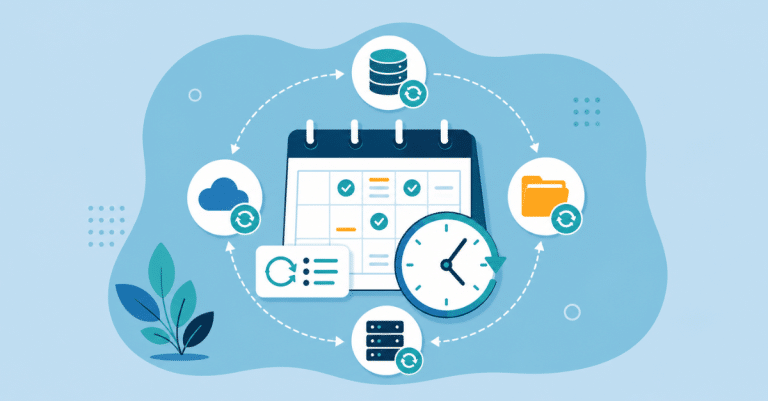
- Source Refresh Planning defines how often external sources should be checked, updated, and synchronized based on business use case and source volatility.
- A data refresh schedule should reflect decision timing, source update frequency, access limits, cost, and downstream dependency.
- Refresh cycle strategy helps teams choose between batch, incremental, and event-driven update models.
- Poor refresh planning creates stale data risk, missed market changes, inefficient infrastructure usage, and weak downstream confidence.
- Reliable refresh operations require freshness monitoring, refresh logs, ownership records, source restrictions, audit trails, and governance controls.

External data sourcing does not end when a source is identified or connected. The enterprise must also decide how often that source should be refreshed, what level of freshness the business requires, and how refresh failures will be detected. A source may be valuable, accessible, and documented, but still fail operationally if it updates faster than the sourcing workflow can capture.
Source Refresh Planning is the discipline of defining refresh cadence, update timing, source volatility, failure handling, and governance for external data sources. It determines when a source should be checked, when new data should be retrieved, and when downstream systems can trust that the latest available information has been captured.
In dynamic data sourcing environments, refresh planning is not a scheduling detail. It is a reliability control for market intelligence, AI workflows, compliance monitoring, pricing operations, demand forecasting, and executive reporting.
Why Source Refresh Planning Matters in Data Sourcing
External sources do not update on the same schedule. A marketplace price may change several times per day. A regulatory page may update unpredictably. A vendor feed may refresh nightly. A public record repository may publish updates weekly. A product catalog may change seasonally except during launch periods.
Source Refresh Planning helps enterprises align update behavior with business need. According to Gartner’s 2025 data and analytics trends, data and analytics are moving from specialized teams into broader organizational use, which raises the operational pressure on data leaders to manage complexity, governance, and reliability at scale. Data sourcing solutions for global markets enable organizations to tap into diverse information streams across regions. By leveraging these solutions, businesses can enhance their decision-making processes and gain a competitive edge. This approach also supports compliance with local regulations, ensuring that data remains reliable and relevant.
Why External Source Value Depends on Update Timing
The value of an external source depends partly on when it is captured. A price feed collected after a promotional window closes may miss the competitive signal. A compliance source checked too late may delay risk response. A demand signal refreshed weekly may be insufficient for fast-moving product categories.
Update timing should reflect the business decision window. If teams need same-day pricing visibility, the refresh cadence must support that. If executives use a source for monthly strategic reporting, daily refreshes may be unnecessary. Also, if AI models retrain weekly, source refresh timing should align with dataset assembly and validation cycles.
Refresh planning prevents teams from treating all sources equally. High-volatility sources require tighter refresh logic. Stable sources can operate on slower cycles. The design should match source behavior and business value.
How Poor Refresh Planning Creates Stale Data Risk
Stale data risk appears when downstream users believe a dataset reflects current source conditions, but the source has changed since the last refresh. This risk can remain invisible because dashboards, tables, and models may still run successfully.
Poor refresh planning can create several issues: missed updates, outdated reports, delayed alerts, inefficient reprocessing, unnecessary infrastructure costs, and false confidence in market stability. A source may appear unchanged simply because it was not checked at the right time.
IBM’s 2025 CDO Study frames decision-ready data as central to AI and enterprise data strategy. In data sourcing operations, decision-ready data depends not only on structure and quality, but also on whether the source was refreshed at the right operational moment.
Understanding Source Update Frequency
Source update frequency describes how often the external source itself changes. This is different from how often the enterprise refreshes it. A source may update hourly, but the business may only need daily visibility. Another source may update rarely, but when it does, the update may be critical.
Understanding source update frequency requires observation, history, and business interpretation. Teams should not rely only on published refresh claims or assumptions from a pilot. At scale, source update behavior should become part of the sourcing metadata that informs cadence, priority, and downstream trust. Understanding data source coverage at scale allows organizations to assess their ability to leverage all relevant data effectively. This comprehensive view can reveal gaps in data availability that might impede decision-making processes. By evaluating coverage thoroughly, teams can ensure they are equipped with the necessary insights to drive strategic initiatives.
Mapping How Often External Sources Actually Change
Refresh planning begins by measuring real source behavior. Teams should observe when fields change, which entities change most often, whether updates follow predictable patterns, and whether volatility differs by region, category, source type, or season.
For example, retail pricing sources may change frequently during promotions but remain stable during normal periods. Public procurement sources may update in batches around publication deadlines. Regulatory sources may remain quiet for long periods and then change suddenly. Vendor feeds may update on a fixed cadence but contain source-level delays.
Mapping real update behavior helps teams avoid over-refreshing stable sources and under-refreshing volatile ones. It also supports more accurate freshness expectations for downstream users. A sourcing program becomes more reliable when the refresh cadence is based on measured source behavior rather than default schedules.
Separating Source Update Frequency from Internal Refresh Needs
Source update frequency does not automatically determine internal refresh cadence. The enterprise should consider decision timing, source criticality, access cost, rate limits, processing load, and downstream consumption.
A source that updates every hour may only need to be captured once per day if the use case is strategic reporting. A source that updates weekly may require immediate event-driven capture if updates affect compliance obligations or supply risk. Internal refresh needs depend on how the data is used.
This distinction is important because excessive refresh activity can increase cost, load, and operational complexity without improving decisions. Under-refreshing creates stale data risk. Source Refresh Planning balances both sides by linking source behavior to business timing.
Designing a Data Refresh Schedule for Enterprise Sources
A data refresh schedule defines when sources are checked, when updates are retrieved, how refresh jobs are prioritized, and how outputs are published. It should not be designed as a single global schedule for all sources.
Enterprise refresh schedules should reflect source volatility, business criticality, data volume, access limits, and downstream dependency. Critical sources require stronger scheduling controls than low-impact sources. The schedule should also remain adaptable as sourcing coverage expands across markets, vendors, and source types.
Aligning Refresh Cadence with Business Decision Timing
Refresh cadence should be tied to the decisions the data supports. Pricing teams may need frequent updates during active market periods. Compliance teams may need rapid awareness of regulatory changes. AI teams may need scheduled dataset refreshes before training runs. Strategy teams may need less frequent but highly consistent refreshes.
If cadence and decision timing are misaligned, teams either operate on stale data or waste resources refreshing data that will not be used. The goal is not maximum frequency. The goal is useful freshness.
A good data refresh schedule defines the expected update window, acceptable freshness threshold, downstream publication timing, and escalation rule if a refresh is missed. It also clarifies which outputs should be blocked when refresh conditions are not met.
Prioritizing High-Volatility Sources Over Stable Sources
Not all sources deserve equal refresh priority. High-volatility sources should receive more frequent checks, stronger monitoring, and tighter failure handling. Stable sources can often run on lower-frequency schedules with periodic verification.
Priority should also account for business impact. A volatile source that does not affect decisions may not require aggressive refresh. A stable source that supports compliance or executive reporting may require strict refresh confirmation even if it rarely changes.
Source priority tiers help teams allocate infrastructure resources. Tier 1 sources may require an hourly or event-driven refresh. Tier 2 sources may refresh daily. Also, Tier 3 sources may refresh weekly or monthly. The tiers should be reviewed as business dependency changes.
Managing Refresh Windows Across Markets, Regions, and Source Types
Refresh windows become complex when sourcing programs operate across regions, languages, time zones, and source types. A marketplace may update overnight in one region and during business hours in another. A public agency may publish updates at specific local times. A vendor feed may arrive after source aggregation completes.
Refresh schedules should account for these patterns. Global sourcing operations may need region-specific windows, local-time scheduling, and staggered processing. They may also need blackout windows, source-specific access limits, or priority handling during market events.
Without this planning, refresh jobs may run at the wrong time, miss new updates, or overload systems during peak processing periods. A disciplined schedule reduces those timing risks before they affect downstream analytics.
Refresh Cycle Strategy for Dynamic Source Environments
Refresh cycle strategy defines the operating model for updates. Some sources are best handled through batch refreshes. Others require incremental updates. Some need event-driven triggers. Many enterprise programs use a combination.
The correct model depends on source behavior, data volume, latency requirements, access method, cost, and downstream dependency. IBM’s 2025 recognition in the Gartner Magic Quadrant for Data Integration Tools reinforces the enterprise need to simplify integration and deliver trusted data at scale, which is directly affected by how refresh cycles are designed and operated.
Choosing Between Batch, Incremental, and Event-Driven Refresh Models
Batch refreshes retrieve data on a fixed schedule. They work well for stable sources, periodic reporting, and lower-frequency workflows. Incremental refreshes retrieve only new or changed records. They are useful when full refreshes are expensive or unnecessary. Event-driven refreshes respond to detected changes or external triggers.
Each model has tradeoffs. Batch refreshes are simpler but may miss intermediate changes. Incremental refreshes reduce processing load but require reliable change tracking. Event-driven models improve responsiveness but require stronger monitoring and trigger logic.
A mature refresh cycle strategy does not force one model across all sources. It assigns refresh models based on volatility, risk, business timing, and technical feasibility.
Balancing Freshness, Cost, Load, and Operational Reliability
More frequent refreshes are not always better. High-frequency updates can increase API costs, compute usage, storage volume, validation workload, and operational noise. They may also violate source access limits or create unnecessary processing when sources rarely change.
A refresh cycle strategy should balance freshness against cost and reliability. Teams should ask how much decision value is gained by refreshing more often. If the marginal value is low, a slower cadence may be more appropriate. If stale data creates significant risk, a higher frequency or event-driven refresh may be justified.
This balance should be reviewed periodically. Source volatility and business dependency change over time. A refresh strategy that works during a pilot may become inefficient or risky once the source supports multiple downstream teams.
Adapting Refresh Cycles as Source Behavior Changes
Source behavior is not static. A source may become more volatile during product launches, seasonal events, regulatory periods, market shocks, or competitive campaigns. It may become less valuable if coverage declines or if another source becomes more authoritative.
Refresh cycles should adapt to these changes. Monitoring should identify shifts in update frequency, missed changes, data volume, source response, and downstream usage. If a source becomes more active, the refresh cadence may need to increase. If it becomes stable, cadence may be reduced.
Adaptive refresh planning helps enterprises avoid rigid schedules that no longer reflect reality. It also helps control cost by focusing refresh intensity where it creates measurable decision value.
Operational Controls for Refresh Reliability
Refresh reliability depends on more than scheduled jobs. Teams need controls that confirm whether refreshes are completed, whether data has changed, whether retrieved data is complete, and whether downstream systems received the update.
A refresh job that runs successfully but retrieves stale, incomplete, or malformed data is not a successful refresh. Operational controls must evaluate data freshness and source behavior, not only task completion.
Monitoring Data Freshness, Missed Updates, and Delayed Sources
Freshness monitoring checks whether data is current relative to the expected source update pattern. Missed update detection checks whether expected changes failed to appear. Delayed-source monitoring distinguishes internal pipeline issues from external source lag.
Useful indicators include last successful refresh, source timestamp, record count change, expected update window, freshness threshold, null-rate changes, and source response history. These metrics should be visible to technical owners and business users where appropriate.
Monitoring prevents silent stale data. If a source has not refreshed within the expected window, teams should know before the issue affects reporting, models, or operational decisions.
Handling Refresh Failures, Backfills, and Source Outages
Refresh failures require defined response logic. Some failures should trigger a retry. Others should pause downstream publication. Some may require backfill after access is restored. Critical failures should escalate to source owners or vendor contacts.
Backfills are especially important when missed refreshes create historical gaps. If a source is unavailable for three days, the system must determine whether missing updates can be recovered, whether the historical record is incomplete, and whether downstream users need to be notified.
Refresh planning should include outage behavior, retry policies, backfill rules, partial-refresh handling, and escalation ownership. Without these controls, refresh failures become hidden data quality issues.
Technology and Integration Considerations
Source refresh planning must be implemented through orchestration, processing, storage, monitoring, and governance systems. The refresh schedule is only useful if systems can execute it reliably and preserve evidence of what happened.
The technology layer should support batch, incremental, and event-driven refresh patterns while connecting refresh outcomes to downstream systems. This is especially important when external source feeds support operational systems rather than occasional analysis.
Orchestrating Refresh Workflows with Airflow, Kafka, and Spark
Airflow can orchestrate scheduled refresh workflows, dependency logic, retries, backfills, and publication gates. Kafka can support event-driven refresh by routing source-change events or update notifications into downstream workflows. Spark can process high-volume refreshes, incremental updates, deduplication, and historical comparisons.
These systems help teams coordinate refresh operations across many sources. A source refresh may trigger validation, transformation, warehouse loading, dashboard updates, or AI dataset preparation. Orchestration ensures that these steps happen in the correct order.
Refresh metadata should be captured during execution. Teams need to know when a refresh ran, what it retrieved, whether validation passed, and which downstream assets were updated.
Connecting Refresh Logic to Warehouses, BI Systems, and AI Pipelines
Refresh outputs often feed Snowflake, BigQuery, Databricks, BI dashboards, forecasting models, and AI pipelines. Refresh logic must therefore align with downstream consumption. A warehouse table should not publish updated records before validation completes. A dashboard should not refresh if required source feeds are missing. An AI training pipeline should know which source version it used.
Integration with tools such as dbt, Prometheus, data catalogs, and lineage systems helps preserve trust. DBT can model refreshed datasets. Prometheus can monitor execution and freshness metrics. Catalogs can show dataset status. Lineage systems can connect refreshed sources to downstream reports and models.
This integration turns refresh planning into operational infrastructure rather than a calendar of jobs.
Governance and Compliance in Source Refresh Planning
Refresh planning has governance implications because source timing affects decision quality, auditability, and usage compliance. Teams should know who owns refresh schedules, which sources are critical, which restrictions apply, and how refresh events are logged.
The OECD.AI 2025 Data Governance Working Group Report highlights the technical, legal, and institutional dimensions of data governance. For enterprise source refresh planning, those dimensions appear in access limits, usage restrictions, source ownership, cross-border rules, and auditability requirements. Developing effective enterprise data sourcing strategies is essential for enhancing data governance and ensuring compliance across various jurisdictions. Organizations that prioritize these strategies can streamline data access while minimizing the risks associated with restrictive regulations. Furthermore, by integrating robust governance practices within their sourcing strategies, teams can improve the overall quality and reliability of the data they leverage.
Creating Refresh Logs, Ownership Records, and Audit Trails
Refresh logs should capture execution time, source accessed, access method, records retrieved, validation outcome, errors, retry attempts, and publication status. Ownership records should identify technical owners, business owners, vendor contacts, and escalation paths.
Audit trails matter when data supports executive reporting, AI workflows, compliance monitoring, or operational decisions. If a report is questioned, teams should be able to show whether the source was refreshed, when it was refreshed, and whether the refresh passed quality checks.
A reliable audit trail also helps procurement, compliance, and governance teams understand whether sourcing operations are being executed as designed. Refresh activity becomes evidence, not just background automation.
Managing Source Restrictions, Access Limits, and Cross-Border Refresh Rules
Some sources restrict access frequency, storage rights, redistribution, or derived use. Vendor contracts may define refresh limits. APIs may enforce rate caps. Public sources may have usage expectations. Cross-border operations may introduce additional review requirements.
Refresh schedules should be designed within these constraints. A technically possible refresh cadence may not be legally or contractually appropriate. Governance metadata should record source restrictions so the refresh logic does not violate approved usage.
KPMG’s 2025 third-party security considerations describe third-party security as a central and strategic enterprise risk concern as organizations rely on more vendors and services. External data sources and vendor feeds should therefore be refreshed under documented oversight, not unmanaged technical convenience.
Conclusion: Building Refresh Discipline into Enterprise Data Sourcing Operations
Source Refresh Planning determines whether external data remains current enough to support enterprise decisions. Identifying a source and connecting to it are only the first steps. The enterprise must also understand how often the source changes, how often it should be refreshed, what freshness level the business requires, and how failures will be handled.
Strong refresh planning defines a data refresh schedule, measures source update frequency, and applies a refresh cycle strategy across batch, incremental, and event-driven workflows. It balances freshness, cost, infrastructure load, access limits, and operational reliability.
The capability matters because stale data can be as damaging as missing data. Market intelligence, AI workflows, compliance monitoring, pricing systems, and executive reports all depend on knowing whether source data is current, complete, and trustworthy.
A structured review can help evaluate whether current sourcing workflows have reliable source refresh planning, documented data refresh schedules, source update frequency monitoring, refresh cycle strategy, failure handling, and audit-ready refresh records. You can run an external data infrastructure audit with our team to review your current setup and understand what is required to build a reliable, enterprise-scale external data infrastructure.