Key Takeaways
- An enterprise data integration framework specifies how data moves, what it means, who is responsible, and when the receiving system may trust it. Connecting applications is necessary but not sufficient.
- Different workloads call for different methods: batch ETL or ELT, APIs, change data capture (CDC), events, or virtual access. Real-time integration is not inherently better.
- The most important design decision is often a business one: what the consuming application considers a valid customer, product, order, supplier, or observation.
- A reliable framework separates a source record from an accepted business record, preserving identity, observation time, mapping rules, and exception history.
- The framework supplies common decisions, while specialized applications still require their own detailed data contracts, synchronization rules, recovery behavior, and governance controls.
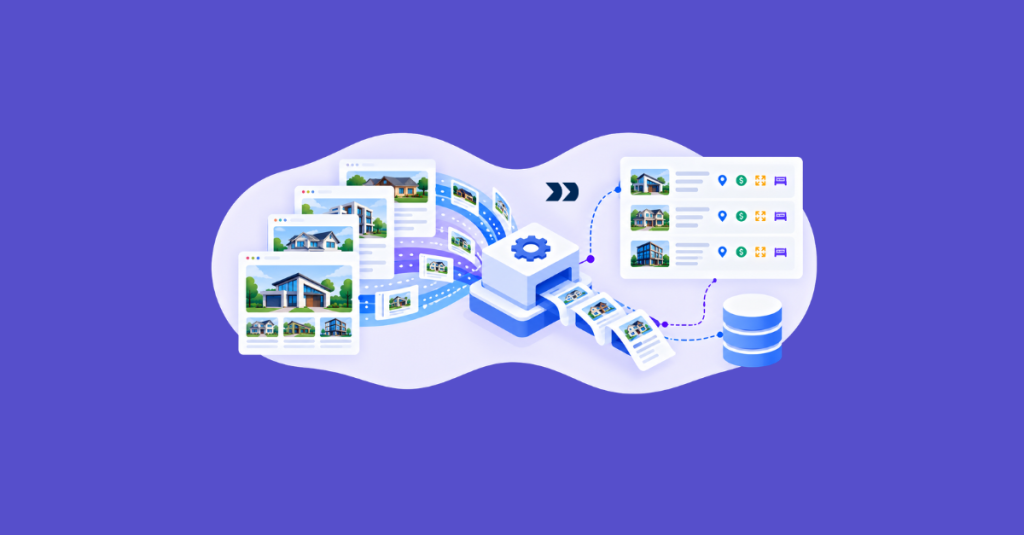
Imagine a retailer trying to compare its product catalog with prices, stock, and promotions from many outside sources. Getting files into a warehouse is one task. Deciding whether two listings describe the same product, whether a discount is conditional, and which timestamp a pricing decision may rely on is another. A useful integration design connects both tasks and makes the second one testable.
This guide sets out a practical enterprise data integration framework: how to define source and consumer boundaries, select integration methods, preserve meaning, verify accepted records, and manage change. Its focus is educational and technical. It explains design decisions that an enterprise team must make regardless of who implements them.
What Is an Enterprise Data Integration Framework?
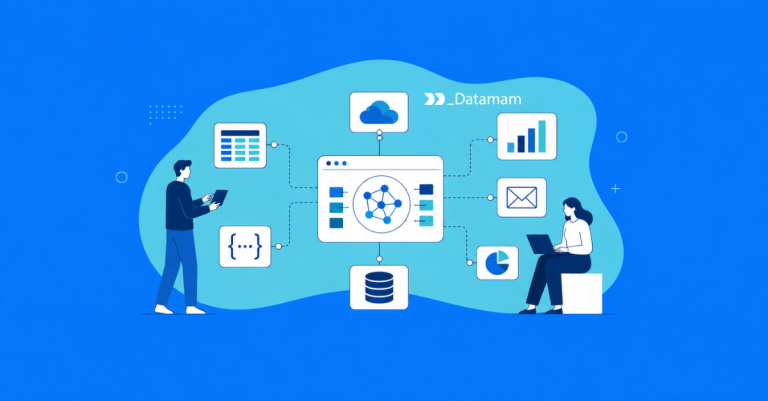
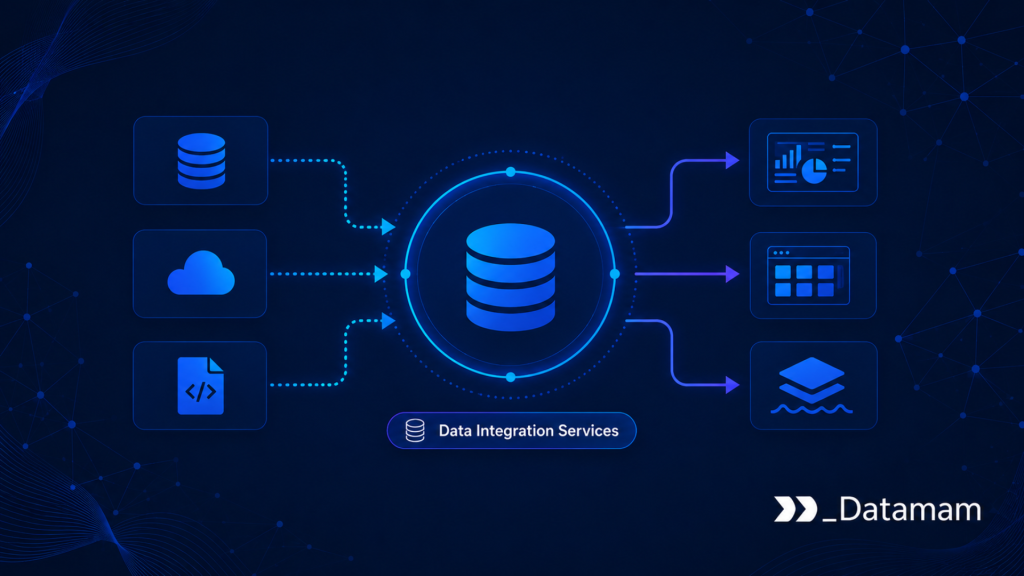
An enterprise data integration framework is a set of architectural and operating rules for moving and reconciling information across applications, databases, analytics platforms, partners, and external data sources. It defines the business objects being exchanged; permitted acquisition methods; identity and transformation logic; delivery contracts; quality controls; timing; and responsibility for errors and changes.
The framework does not require one database, one vendor, or one integration platform. It can govern a small number of critical pipelines or an estate of different applications. Its purpose is to establish consistent decisions about the data wherever the implementation runs.
Connections, common meaning, and consumption are separate problems
A connector answers whether system A can send data to system B. Mapping answers whether an item, identifier, or field from A means the same thing in B. Consumption answers whether a target can safely use the resulting record. All three must work. For instance, two customer systems may exchange an address successfully while disagreeing about which account owns it or when it became effective.
A framework starts with an explicit consumer requirement: a reconciliation report may need complete historical detail, while an operational application may need only the current accepted state. These are different views over potentially the same inputs. Treating them as identical creates needless duplication or silently discards valuable history.
A framework is not a data integration service
The framework describes a repeatable approach and technical boundaries. A data integration service is a commercial arrangement for implementing or operating that work. A company can apply this framework with internal engineers, a platform, specialist partners, or a mixture. The two questions are different: this guide explains the method; a service page describes a provider’s offering and scope.
Gartner’s data integration strategy guide distinguishes strategy, organizational model, architecture, technology, governance, and metadata. Those are useful dimensions for checking whether an enterprise has designed a practice, rather than merely deployed connections.
Start With the Enterprise Decision, Not the Integration Tool
The first question is not which connector supports the source. It is: which decision or workflow will fail if a record is absent, late, duplicated, or wrong? This determines the meaning of reliable delivery.
Define the consumers and their acceptance rules
For each flow, record the consuming team or application, purpose, entities, critical attributes, timing tolerance, acceptance tests, and failure consequence. A forecasting system may tolerate a revised historical record; an order-fulfillment system may need a clear rule for rejecting duplicates before writing to inventory. A KPI report may accept a frozen month-end snapshot, while an alerting workflow may require updated observations throughout the day.
An acceptance rule should be testable by the receiving team. For example, a nightly product feed is incomplete if any required region is missing, even when the extraction job returns success. A customer table is not ready for use until identifiers and deduplication rules have been approved.
Create a real source-to-consumer inventory
A useful inventory identifies each producer and consumer, the system of record, identifiers, expected population, access method, update behavior, owner, transformation dependency, and known exceptions. It should include recurring CSV files, external feeds, manual uploads, and hidden spreadsheet transfers, not just documented APIs.
A practical starting artifact is a flow register: one record per meaningful producer-to-consumer relationship. Add a consumer-level definition of complete or accepted delivery. Then classify what is missing: a missing source, an unknown identity, an unsupported field, an inaccessible record, or an actual business deletion. These states must not be collapsed into one blank value. Datamam explains identifier alignment further in its cross-system data mapping workflows guide.
A flow register also makes integration scope visible to business owners. If a new source changes the expected population or business meaning, reviewers can determine which consumers require a revised contract before a production release is made.
The End-to-End Framework From Source to Accepted Output
A shared pipeline model should represent more than network transit. At minimum, it needs the following accountable stages:
| Stage | Essential decision | Evidence to preserve |
| Source scope | Which systems, feeds, or records are in scope? | Source inventory, owner, access and expected population |
| Ingestion | What was obtained, and when? | Source ID, capture time, method, batch or event ID |
| Identity and mapping | Which business object does this record describe? | Source key, canonical key, mapping rule version |
| Transformation | Which fields and units have been standardized? | Original values, conversion rules, target schema |
| Validation | Does this record satisfy the consumer contract? | Test results, acceptance or rejection reason |
| Publication | What was actually available to the consumer? | Release ID, accepted count, publication time |
| Observation and recovery | What changed or failed after initial publication? | Replay history, exception state, owner and resolution |
The point of the stages is not to mandate seven separate technologies. A small pipeline may implement several in one program. The separation matters because the business must be able to tell a failed extraction from a failed match, a rejected record from a late batch, and a source correction from an engineering defect.
Successful transfers are not accepted records
An HTTP 200 response, successful file download, or completed scheduled task confirms a technical event. It cannot prove that the delivered data satisfies the destination’s business rules. An accepted record meets an agreed contract: required attributes exist, the right entity was identified, units and dates are interpretable, and disallowed duplicates or states have been handled.
Keep rejected observations traceable. If a product changes from a one-pack to a two-pack, retaining the captured price while withholding it from a single-unit comparison is usually safer than treating the apparent price jump as a genuine market movement. That distinction also applies to duplicate customers, revised supplier IDs, and changed order-status vocabularies. The W3C PROV-O specification supplies a common vocabulary for describing provenance relationships among data entities, activities, and agents. Datamam also explains this evidence layer in data provenance systems.
Keep source evidence separate from current business state
A historical source observation, an accepted mapping, and a current operational state should not all share one mutable row. Corrections may require changing the current interpretation while retaining the prior observation and the rule used at the time. This makes audit, replay, and recalculation possible when definitions evolve.
For data that originates on websites, web scraping services and extraction methods describe one possible acquisition layer. Collection can supply integration inputs, but successful collection does not itself establish that the receiving system has accepted the data.
Compare the Main Enterprise Integration Methods
A framework should select the least complex method that meets a real consumer requirement. Different business processes can use different methods within one governed architecture.
| Method | Suitable workload | Main advantage | Main tradeoff |
| ETL / scheduled batch | Periodic reporting and curated loads | Defined transformation and release windows | Data is only as recent as the completed cycle |
| ELT | Warehouse or lakehouse analytics | Raw inputs can be preserved before transformation | A loaded table may still be unusable until validated |
| APIs | On-demand reads and transactional updates | Explicit contracts and targeted access | Availability and request limits do not solve semantics |
| Change data capture | Incremental database change propagation | Avoids repeatedly reading full source populations | Requires ordering, deletion, and replay rules |
| Event-driven messaging | Business state changes and reactive workflows | Can reduce time between event and consumer action | At-least-once delivery and out-of-order events complicate state |
| Federation / virtualization | Queries across distributed systems | May avoid copying every source | Results depend on source performance and access |
ETL and ELT solve different placement questions
ETL transforms records before loading them into a destination; ELT loads information first and transforms it using destination compute. Neither is universally superior. ETL can prevent invalid records from entering a protected target. ELT can preserve source fidelity and support multiple downstream interpretations. Many enterprise environments need a blend, such as raw-history storage with curated, accepted publication tables. The separate data validation pipeline guide covers validation before publication.
The integration framework should specify where acceptance occurs, not merely where SQL runs. A transformation can complete without ensuring that a customer identifier, currency, or business date is valid.
APIs and events suit different interaction patterns
An API often answers a particular request or updates a record through a documented interface. Events describe something that happened and let consumers respond asynchronously. The important distinction is the delivery contract: can a message be repeated, arrive out of order, be delayed, or be withdrawn? A correct consumer must handle the properties of the selected system, not assume exactly-once business effects.
When several paths carry the same business entity, agree which path is authoritative, how conflicts are resolved, and whether late-arriving changes can revise earlier published state. Without these rules, a faster integration can simply distribute contradictory records more quickly.
CDC and virtual access introduce their own limits
CDC describes changes in a source database and can support near-current downstream replicas or event streams. It is not a universal change log for every business system: source transactions may not directly correspond to a customer-visible event, and changes can require reconstruction before a consumer sees a valid state.
Federated queries can reduce copies but create dependencies on source latency, access rights, and availability. If auditability requires the exact information visible at a particular date, a controlled snapshot may be more defensible than a query against today’s live source.
Preserve Meaning Across System Boundaries
Most subtle integration defects arise from apparently harmless differences: identifier reuse, time-zone conversions, product variants, customer hierarchies, historical effective dates, and source fields that carry different business meanings.
Establish canonical identity without deleting source identity
A canonical customer or product ID helps consumers combine records, but it should coexist with source identifiers. The record needs enough provenance to answer which source item was matched to which business entity, according to which rule, at which time. If a match is later corrected, the source observation should remain recoverable.
A mapping table should explicitly connect source identifier, canonical identifier, match type, evidence, and rule version. This allows an analyst to challenge an incorrect match without erasing the underlying source observation or the history that used it.
Use data contracts for behavior, not just column names
A data contract should define identifiers, required fields, types, allowed states, update behavior, correction semantics, expected delivery cadence, rejection handling, and responsibilities. A schema that says price DECIMAL is insufficient if neither system agrees whether price includes shipping, tax, discounts, or the original currency.
Gartner’s 2026 data and analytics predictions include a forecast, not an established outcome, about AI agents interpreting policies into machine-verifiable data contracts by 2030. That projection underscores the importance of explicit meanings and testable rules; it does not replace today’s human-reviewed contracts.
Design Freshness, Consistency, and Recovery for the Consumer
A “real-time” label is not an acceptance requirement. What matters is the time between a source change, an accepted result, and the consumer’s use of it. A fast request that publishes the wrong record is not better than a slower verified one.
Define freshness at the point of use
Specify how old an accepted record may be when the consumer acts on it. Some workflows legitimately require minutes; others need reliable daily or monthly cohorts. If a source updates only overnight, polling it every second does not create new information. Freshness should be measured against the business decision, not against the job scheduler alone.
Reconcile before classifying an absence as a deletion
A record missing from a source response may have been deleted, filtered out, temporarily unavailable, or lost because a collection failed. Deletion policies should require suitable evidence, and release counts should distinguish observed absence from incomplete coverage.
Separate the exception queue from accepted output. A failed collection, unresolved identity, invalid record, and confirmed deletion should have different states and recovery actions. Downstream consumers should receive a coverage signal rather than assuming missing records mean a business event occurred.
Treat replay and corrections as first-class requirements
Consumers should know whether re-running a delivery creates duplicate records, replaces current state, or appends a dated correction. Idempotent write behavior, stable observation IDs, release manifests, and retained processing evidence help prevent an incident from becoming an unreconcilable history change. A framework does not mandate one algorithm, but it must settle those semantics before launch. For the downstream contract, see data delivery pipeline architecture.
Governance and Ownership Are Part of Integration Design
Integration moves information across security, business, and operational boundaries. The design therefore needs explicit accountability for source access, interpretations, transformation changes, consumer permissions, retention, and incident handling.
Document who owns the meaning and who owns the pipeline
The source owner can explain the source record; a business data steward should approve meaning and identity rules; engineering owns processing and recovery; and the consumer owns acceptance criteria. These responsibilities may sit with one small team or across a large organization, but none can be omitted.
Security and data-sharing permissions follow the flow
An authorized source does not automatically mean every destination may store every field. Data minimization, access control, location restrictions where applicable, retention, and traceability should be assessed at each boundary. The OECD’s work on data access and sharing in the age of AI discusses legal, technical, and organizational considerations, rather than suggesting that sharing is unrestricted. Datamam examines this boundary in data integration governance.
For AI-dependent data flows, governance should also document how datasets are used, which consumers may access them, and what oversight is required. These are risk-management choices, not a reason to mandate a particular ETL process, API, or integration product.
What Documented Retail Data Work Teaches About Integration
A Datamam retail-price intelligence project gives a concrete example of why a receiving system needs accepted relationships, not merely imported source records. The documented program covered 1.2 million catalog SKUs, 4.8 million active product-to-retailer mappings, and 12 source integrations. Its delivery model included Snowflake, with accepted prices linked to the product relationships that justified each comparison. For the corresponding commercial data problem, see web scraping for price comparison.
A central challenge was identity: a branded item might have a manufacturer identifier, whereas a private-label product required category-specific equivalence rules. A similar title could still conceal a different size, pack count, or specification. Accepted mapping records therefore preserved the source listing, client reference, match type, supporting evidence, rule version, and review state. Discovery and refresh did different jobs: discovery found or repaired relationships, while refresh revisited the accepted ones.
The transferable lesson is precise. Integration acceptance includes the validity of relationships, not only the validity of individual rows. A newer price attached to the wrong item is not useful just because it arrived on time. Historical source evidence should remain available when a mapping is revised, so the receiving analytics system can explain why its current interpretation changed.
The result illustrates a general principle, not an industry benchmark: acceptance rules and retained matching evidence are as important as successful data transfer when the receiving system must compare entities across sources.
Apply the Framework to Six Common Enterprise Workflows
The same framework can be applied to different business systems, but the entity and state rules change. These examples show the decision each integration must answer without going into application-specific implementation detail.
| Workflow | Business identity or state question |
| ERP and CRM alignment | Which account, order, and product identifiers agree across applications? |
| Customer 360 | Which source records belong to the same customer, and under what consent or access conditions? |
| Supplier coordination | Which vendor identifiers, product codes, and process statuses are equivalent? |
| Order and warehouse operations | What is the authoritative order state when fulfillment events arrive asynchronously? |
| Product-information synchronization | How do variants, attributes, and catalog updates remain compatible? |
| Post-merger system consolidation | How can different system histories be reconciled without collapsing distinct entities? |
The comparison reinforces a design boundary: a central framework defines common acceptance and operational rules; each business workflow supplies its own identities, data meaning, ownership, and tolerance for delay or correction.
How Integration Supports Analytics and AI Without Becoming an AI Article
Integrated information is often an input to analytics or AI, but a data integration framework does not make a model accurate by itself. It can make datasets more traceable, consistent, and available, which are necessary for many downstream tasks. Model evaluation, feature engineering, and human oversight remain separate disciplines.
The McKinsey 2025 global AI survey reported that nearly two-thirds of respondents had not started scaling AI enterprise-wide. That finding measures adoption, not the effect of a particular integration architecture. The practical connection is narrower: analytics and AI systems need traceable, accepted inputs before teams can rely on their outputs.
Assess the Framework With Evidence, Not Connector Counts
A technically sound integration program should be able to answer these questions for a representative high-impact flow:
- Population: Which source records were expected, accepted, excluded, late, or unresolved?
- Identity: Can a consumer trace a record to its original source IDs and mapping decision?
- Meaning: Are units, business dates, states, and transformations defined and versioned?
- Timeliness: Is the record sufficiently current when used, not merely when fetched?
- Recovery: Can a failed or corrected release be replayed without double-counting?
- Ownership: Who approves semantic changes and who handles exceptions?
- Change: Can the organization add another source without silently changing historical definitions?
A sensible program starts with one meaningful consumer and proves these controls before expanding to more flows. It can then standardize what is genuinely reusable: naming, source inventories, release manifests, quality measures, incident handling, and approval responsibilities. Teams should preserve room for justified exceptions, since forcing every workload through the same technology can be as harmful as having no common design.
A framework succeeds when the recipient can explain the information it used: which source contributed it, which rule made it comparable, when it became acceptable, and what happened when something went wrong. That is a more useful definition of enterprise integration maturity than a count of connected applications.
For organizations whose requirements include recurring third-party data acquisition, normalization, and delivery into existing systems, discuss your data requirements with Datamam.
Frequently Asked Questions
Does an enterprise data integration framework require one platform?
No. A shared framework sets expectations for identity, acceptance, provenance, security, timing, and recovery. Different workloads may use separate ETL services, applications, event infrastructure, and warehouses while following common controls.
How is a framework different from enterprise data architecture?
Enterprise architecture covers a wider landscape of applications, data stores, ownership, networks, standards, and change programs. A data integration framework focuses on the movement, reconciliation, and trusted consumption of information between those components.
When is data federation preferable to replication?
Federation can make sense when source access is stable, consumers tolerate live-query dependency, and copying is unnecessary or restricted. Replication is usually more suitable when consumers need independent availability, reproducible historical states, high-volume analysis, or source-isolated workloads.
Can batch and event-driven integration coexist?
Yes. A common design combines a periodic reconciled baseline with incremental changes. The difficult part is ensuring the two paths agree on identifiers, effective dates, deletion behavior, and which version of a record wins when messages arrive late.
What is the difference between data integration and data migration?
Migration generally moves a defined population from one environment to another for a transition. Integration maintains agreed information exchange and common meaning across systems, often over an extended period. Migration can contain integration work, but its end condition is different.
What should be documented before publishing the first integrated dataset?
Document the source population, business definitions, consumer, identifier mapping, accepted-record rules, expected delivery timing, security constraints, exception states, correction behavior, and the team responsible for reviewing changes. Without these facts, a dataset may be available but difficult to trust.