Key Takeaways
- Why data delivery pipelines are critical to enterprise data architecture
- How real-time data delivery systems differ from batch-based integration
- How API data delivery architecture and streaming pipelines enable scalable distribution
- How enterprise systems consume external data through structured integration layers
- How governance, monitoring, and security ensure reliable delivery
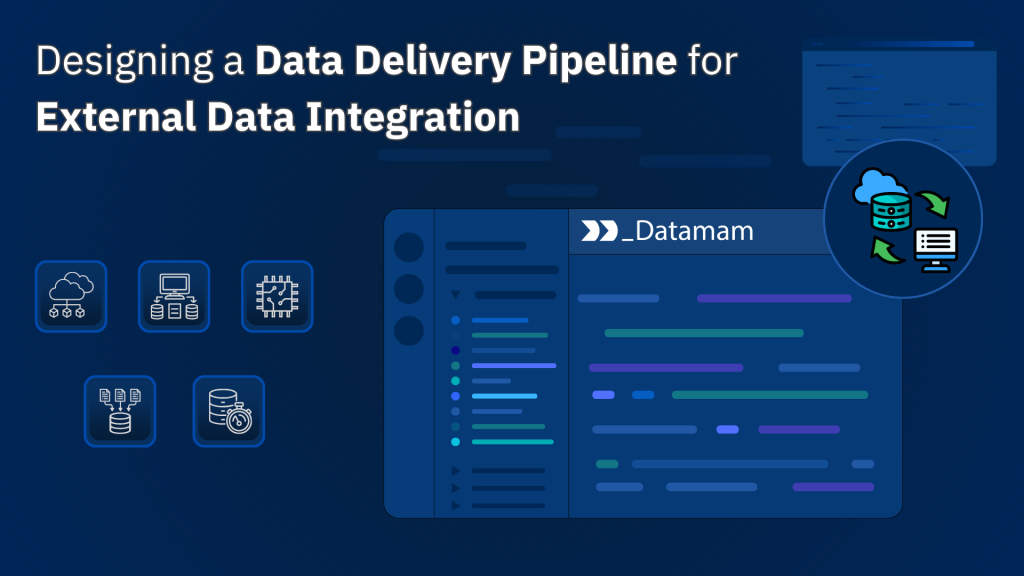
Modern enterprises depend on continuous data flows to support analytics, automation, and AI-driven decision systems. However, the value of external data is not created at extraction. It is realized when data is reliably delivered into operational systems in a structured and timely manner.
A data delivery pipeline serves as the integration layer that connects upstream data acquisition with downstream enterprise platforms. As organizations expand their reliance on external signals, delivery systems must support real-time distribution, scalable integration, and consistent data availability across multiple business functions.
Without a structured delivery infrastructure, even high-quality data remains underutilized. As a result, designing reliable delivery pipelines has become a core requirement in enterprise data architecture.
Why Data Delivery Pipelines Are Critical in Enterprise Data Architecture
Data delivery pipelines operate at the intersection of data collection, processing, and consumption. They ensure that structured datasets reach analytics platforms, dashboards, and AI systems in a usable format.
According to Gartner, organizations are increasingly prioritizing real-time data processing and integration capabilities to support automated decision environments and AI-driven operations. One critical aspect of these advancements involves utilizing external data sources for ai training, allowing for richer model development and enhanced predictive accuracy. As companies harness diverse data types from various industries, the potential for innovation in AI applications expands significantly. This trend highlights the necessity for robust data governance frameworks to maintain the quality and integrity of the data being leveraged.
From Data Extraction to Operational Systems
Data extracted from external sources must undergo multiple transformation stages before becoming usable. The data delivery pipeline is responsible for transferring structured data into enterprise systems such as data warehouses, analytics platforms, and operational applications.
This transition requires compatibility between upstream outputs and downstream systems. Delivery pipelines must ensure that data is formatted correctly, arrives consistently, and integrates seamlessly into existing workflows.
Without a reliable delivery layer, organizations face fragmentation, with data existing but not operationalized effectively.
Latency, Throughput, and Data Freshness Requirements
Enterprise systems often depend on timely data updates. In environments such as pricing optimization, risk monitoring, or demand forecasting, delayed data can reduce decision accuracy.
Real-time data delivery systems address this challenge by minimizing latency between data generation and consumption. However, achieving low latency requires infrastructure capable of handling high throughput while maintaining consistency.
Organizations must balance:
- real-time delivery requirements
- system scalability
- data consistency across distributed environments
Delivery pipelines must therefore be engineered to meet both performance and reliability expectations simultaneously.
Core Delivery Mechanisms in Data Delivery Pipelines
The architecture of a data delivery pipeline depends on how data is transmitted and consumed. Modern systems typically rely on a combination of APIs and streaming pipelines to distribute data efficiently.
API-Based Delivery and Structured Data Access
API-based delivery represents one of the most common approaches in enterprise environments. API data delivery architecture allows structured datasets to be accessed through controlled endpoints, enabling systems to request data on demand.
APIs provide:
- standardized data formats
- controlled access mechanisms
- integration flexibility across systems
This approach is particularly effective when data consumers require selective access to specific datasets rather than continuous streams.
Streaming Pipelines and Event-Driven Data Flows
In environments where data changes continuously, data streaming pipelines provide a more efficient delivery model. Streaming systems deliver updates in real time, allowing downstream systems to react immediately to new information.
Event-driven architectures enable pipelines to trigger updates based on detected changes rather than fixed schedules. This approach reduces latency and ensures that systems operate on the most current data available.
As organizations scale external data pipelines, ensuring consistent and low-latency delivery becomes increasingly complex across multiple systems and use cases.
You can run an external data infrastructure audit with our team to review your current setup and understand what is required to build a reliable, enterprise-scale external data infrastructure.
Integrating Data Delivery Pipelines with Enterprise Platforms
Data delivery pipelines must integrate seamlessly with enterprise systems that consume data. This integration ensures that structured datasets are accessible across analytics, reporting, and operational environments.
According to the OECD, reliable data infrastructure and integration capabilities are essential for enabling scalable digital ecosystems and data-driven decision-making. Building on this foundation, organizations are increasingly prioritizing scalable architecture for enterprise systems to handle growing data demands. This architectural approach facilitates flexibility and resilience, enabling businesses to adapt to changing market conditions and technology advancements. As a result, companies can optimize their operations while enhancing the quality and accessibility of their data.
Integration with Data Warehouses and ETL Systems
Enterprise data warehouses serve as central repositories for structured data. Delivery pipelines must therefore integrate with systems such as Snowflake, BigQuery, or similar platforms.
This integration often occurs through ETL or ELT processes that load data into warehouse environments where it can be queried and analyzed.
Effective integration requires:
- consistent data schemas
- reliable data transfer mechanisms
- compatibility with warehouse ingestion processes
Feeding Analytics, BI, and Decision Systems
Once data is delivered into enterprise platforms, it must be accessible to analytics systems and decision-making tools.
Delivery pipelines support:
- business intelligence dashboards
- reporting systems
- predictive analytics models
- AI-driven applications
By ensuring consistent data availability, pipelines enable organizations to maintain accurate situational awareness across operations.
For a broader architectural view of how delivery integrates with upstream collection and validation layers, see our Enterprise Data Collection Services infrastructure analysis.
Reliability, Security, and Control in Data Delivery Pipelines
Enterprise data pipelines must maintain high levels of reliability and security. Delivery systems must ensure that data remains accessible, accurate, and protected throughout the integration process.
According to NIST, secure data management and continuous monitoring are critical for maintaining trustworthy data systems in environments that support automated decision-making.
Access Control and Secure Data Delivery
Data delivery pipelines must enforce strict access control mechanisms to protect sensitive information and ensure compliance with enterprise security policies.
This includes:
- authentication systems that verify user access
- authorization controls that restrict data usage
- secure transmission protocols that protect data in transit
These controls ensure that only authorized systems and users can access delivered datasets.
Monitoring Delivery Performance and System Stability
Reliability depends on continuous monitoring of pipeline performance. Delivery systems must track metrics such as uptime, latency, and data completeness.
Monitoring systems enable organizations to detect failures quickly and implement corrective actions before disruptions affect downstream systems.
This level of observability is essential for maintaining consistent data availability across enterprise environments.
Technology Stack and Systems Behind Data Delivery Pipelines
Enterprise-grade data delivery pipeline systems rely on coordinated technologies that operate across orchestration, streaming, storage, and monitoring layers.
Orchestration and Pipeline Coordination
Workflow orchestration platforms such as Apache Airflow manage dependencies between pipeline stages, ensuring that data flows through ingestion, transformation, and delivery processes in a controlled manner.
Streaming and Real-Time Delivery Infrastructure
Streaming platforms such as Apache Kafka enable event-driven data delivery, allowing systems to process updates continuously rather than in batch cycles.
These systems are central to modern real-time data delivery systems.
Storage and Analytical Integration Layers
Delivered data is stored in platforms such as Snowflake, BigQuery, or Databricks, where it supports analytics and machine learning workflows.
These systems enable scalable data access across enterprise environments.
Monitoring, Validation, and Observability
Observability tools such as Prometheus track pipeline performance, latency, and failures. These systems provide visibility into data flows and help prevent disruptions.
Governance, Lineage, and Compliance Controls
Governance mechanisms ensure that data delivery pipelines remain compliant and auditable. This includes:
- data lineage tracking
- audit logs
- access control policies
These controls provide transparency across the pipeline and support regulatory compliance requirements.
Data Delivery Pipelines as a Foundational Infrastructure Layer
Data delivery pipelines have evolved from supporting components into foundational infrastructure within enterprise data ecosystems. As organizations depend increasingly on external data, reliable delivery systems become essential for maintaining operational continuity.
Delivery pipelines must support scalability, integration, and real-time responsiveness across diverse systems. They must also align with governance frameworks and security policies to ensure that data remains reliable and compliant.
For a broader architectural perspective on how delivery integrates with collection, validation, and monitoring systems, see our Enterprise Data Collection Services infrastructure analysis.
Ultimately, organizations that design robust data delivery pipelines create data ecosystems capable of supporting analytics, automation, and AI systems at scale. These pipelines enable consistent data availability, reduce latency in decision-making, and ensure that external data can be operationalized effectively across the enterprise.
You can run an external data infrastructure audit with our team to review your current setup and understand what is required to build a reliable, enterprise-scale external data infrastructure.