Key Takeaways
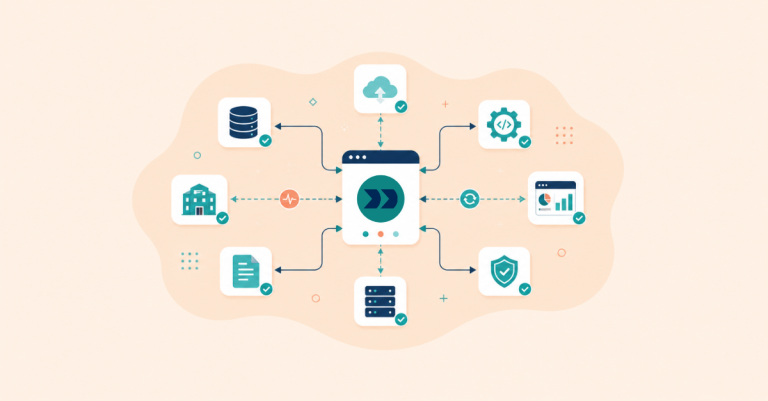
- Endpoint Coordination defines how enterprise delivery systems manage destination endpoints, readiness checks, connectivity status, routing rules, and delivery ownership.
- Data endpoint management should track endpoint type, owner, access requirements, format expectations, delivery window, retry behavior, and downstream dependency.
- Endpoint connectivity monitoring helps teams detect unavailable, slow, blocked, overloaded, or misconfigured destinations before delivery failures spread downstream.
- A strong endpoint management system should support registration, validation, routing, throttling, escalation, audit trails, and lifecycle review.
- Reliable endpoint coordination protects dashboards, reporting systems, APIs, customer notification workflows, procurement portals, product feeds, and inventory updates from delivery disruption.
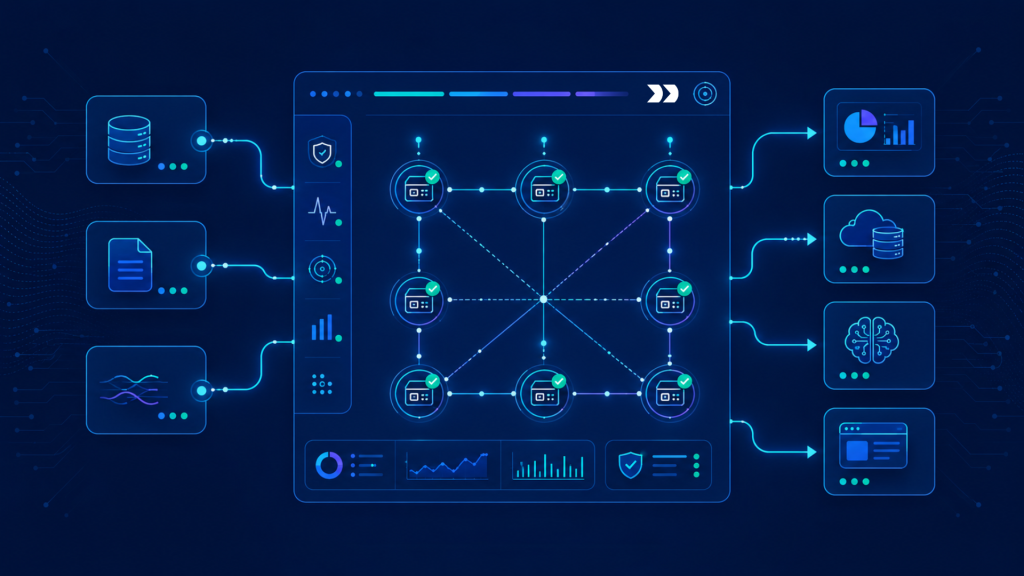
Enterprise data delivery does not end when a dataset is prepared. The data still has to reach the correct destination, in the right format, through the right delivery path, at the right time, with evidence that the endpoint accepted it. A warehouse table, BI dashboard, API endpoint, SFTP folder, message queue, notification system, reporting portal, or partner feed may each have different availability, access, capacity, and validation requirements.
Endpoint Coordination creates the control layer for these delivery targets. It defines which endpoint receives which data, when it is available, how delivery is validated, who owns the destination, and how failures are handled.
In enterprise data delivery systems, endpoint coordination is not simple routing. It is operational infrastructure for preventing prepared data from becoming delayed, rejected, duplicated, misdirected, or unavailable downstream.
Why Endpoint Coordination Matters in Data Delivery
Endpoint Coordination matters because enterprise data is usually distributed to many consumers. The same prepared dataset may move into executive dashboards, customer notification systems, procurement reporting, revenue operations, compliance archives, product catalog feeds, and inventory workflows.
The OECD’s data flows and governance work states that effective data use and governance depend on the ability to move, share, analyze, and protect data. Endpoint coordination is one of the practical mechanisms that make data movement controlled across enterprise destinations.
Why Delivery Endpoints Become Operational Dependencies
A delivery endpoint is not just a technical address. It represents a downstream dependency. If the endpoint is unavailable, misconfigured, overloaded, or not ready to consume data, the delivery workflow can fail even when upstream processing is complete.
For example, an executive dashboard may depend on a warehouse table refresh. A customer notification system may depend on a delivery API. A compliance team may depend on a locked archive location. A marketplace feed may depend on a product catalog endpoint. Each destination has different requirements.
Endpoint Coordination gives teams a way to manage these dependencies explicitly. It connects endpoint metadata, delivery rules, readiness checks, monitoring, retry behavior, and ownership.
How Weak Endpoint Management Creates Delivery Risk
Weak endpoint management creates delivery risk because destinations change. Credentials expire. URLs move. BI refresh schedules shift. API endpoints become rate-limited. SFTP folders change permissions. Partner portals introduce new validation rules. Message queues back up. A target system may still exist but no longer be ready for production delivery.
If endpoint records are scattered across scripts, tickets, spreadsheets, and individual team knowledge, delivery failures become harder to diagnose. Teams may know that a report did not arrive, but not whether the failure came from source delay, transformation failure, endpoint downtime, authentication rejection, capacity limits, or format mismatch.
Gartner’s 2025 data and analytics trends notes that data and analytics are becoming more ubiquitous while D&A leaders face rising expectations and higher operational stakes. As more workflows depend on distributed data, endpoint reliability becomes part of enterprise performance.
Data Endpoint Management Across Enterprise Systems
Data endpoint management defines how delivery targets are registered, classified, secured, monitored, and maintained. The endpoint record should describe where data is delivered, who owns the destination, what format is expected, when delivery is allowed, and how failures should be handled.
A mature endpoint management system does not only store destination addresses. It stores operating requirements.
Registering Endpoint Type, Owner, and Delivery Purpose
Each endpoint should have a clear registration record. This should include endpoint name, endpoint type, target system, owning team, business purpose, access method, delivery format, expected cadence, supported file or payload type, delivery window, retry policy, escalation contact, and lifecycle status.
Endpoint type matters because delivery behavior differs by destination. A BI refresh endpoint may need dependency checks. An API endpoint may need rate-limit awareness. A file destination may need naming conventions and permissions. A queue may need depth monitoring. A compliance archive may need immutability controls.
A simple endpoint registry pattern can look like this:
ENDPOINT_REGISTRY = {
    "executive_dashboard": {
        "endpoint_type": "bi_refresh",
        "owner": "analytics_operations",
        "required_checks": ["warehouse_ready", "validation_passed"],
    },
    "inventory_feed": {
        "endpoint_type": "api_delivery",
        "owner": "commerce_operations",
        "required_checks": ["endpoint_available", "rate_limit_clear"],
    },
}


def validate_endpoint_ready(endpoint_name, completed_checks):
    endpoint = ENDPOINT_REGISTRY.get(endpoint_name)

    if not endpoint:
        return {"ready": False, "reason": "unknown_endpoint"}

    missing = [check for check in endpoint["required_checks"] if check not in completed_checks]
    if missing:
        return {"ready": False, "reason": "missing_endpoint_checks", "checks": missing}

    return {"ready": True, "owner": endpoint["owner"]}
This follows the same structure as the previous snippets: define rules, check readiness, and block delivery when the endpoint is not safe to use.
Mapping Datasets to Approved Delivery Endpoints
Not every dataset should be allowed to reach every endpoint. Customer data may have stricter access requirements than product attributes. Revenue data may require finance approval before distribution. Compliance data may need archival controls. Inventory updates may need fast operational delivery but limited recipient access.
Data endpoint management should define which datasets can be delivered to which endpoints. This mapping should account for business purpose, access permissions, data sensitivity, delivery cadence, and downstream usage.
Without approved endpoint mapping, data can drift into unauthorized or unsupported destinations. This increases governance risk and makes downstream data lineage harder to explain.
Managing Endpoint Format and Contract Expectations
Each endpoint expects data in a specific form. A dashboard may expect a warehouse table. A reporting system may expect CSV. A notification system may expect JSON. A product catalog endpoint may require field-level validation. A compliance archive may require signed files with timestamps and checksums.
Endpoint Coordination should document these expectations. It should define file naming rules, schema version, required fields, timestamp format, partition logic, compression, encryption, and acknowledgement behavior where relevant.
In practice, delivery reliability depends on endpoint contract discipline. A delivery may technically succeed while the endpoint rejects, ignores, or misinterprets the payload.
Endpoint Connectivity Monitoring
Endpoint connectivity monitoring verifies that destinations are reachable, responsive, authenticated, and ready before and after delivery. It should identify endpoint downtime, degraded latency, failed authentication, capacity issues, rate limits, and acknowledgement failures.
Deloitte’s data observability guidance states that observability depends on technology, process, governance, and talent, not only a monitoring platform. Endpoint connectivity monitoring follows the same logic because endpoint health must be connected to ownership, escalation, and recovery.
Monitoring Availability, Latency, and Acknowledgement
Connectivity monitoring should include more than a ping. A destination may be reachable but still unable to accept delivery. An API may return rate limits. A queue may be overloaded. A file destination may reject writes. A dashboard refresh may fail after delivery.
Endpoint monitoring should track availability, response time, delivery acceptance, authentication result, retry count, acknowledgement status, and failure reason.
A compact endpoint status classifier may look like this:
ENDPOINT_HEALTH_RULES = {
    "latency_warning_ms": 1000,
    "retryable_statuses": ["timeout", "rate_limited", "temporary_unavailable"],
    "blocked_statuses": ["unauthorized", "permission_denied", "schema_rejected"],
}


def classify_endpoint_status(endpoint_result):
    if endpoint_result["status"] in ENDPOINT_HEALTH_RULES["blocked_statuses"]:
        return {"delivery_action": "block", "owner": "data_operations"}

    if endpoint_result["status"] in ENDPOINT_HEALTH_RULES["retryable_statuses"]:
        return {"delivery_action": "retry", "owner": "delivery_operations"}

    if endpoint_result.get("latency_ms", 0) >= ENDPOINT_HEALTH_RULES["latency_warning_ms"]:
        return {"delivery_action": "monitor", "owner": "platform_operations"}

    return {"delivery_action": "deliver"}
This snippet keeps the logic close to your earlier examples: evaluate status, classify the condition, and route the delivery action to the correct owner.
Detecting Authentication, Permission, and Routing Failures
Endpoint failures are often caused by access issues. A credential may expire. Permission may change. A token may lose scope. A partner endpoint may rotate certificates. A storage path may be locked. A downstream system may reject delivery from an unrecognized sender.
Connectivity monitoring should classify these failures separately from temporary downtime. Retrying an unauthorized delivery will not fix the problem. It should route to access review or endpoint owner escalation.
This classification reduces wasted retries and helps teams recover faster.
Watching Capacity and Rate-Limit Constraints
Some endpoints cannot accept unlimited delivery volume. APIs may rate-limit requests. Queues may build a backlog. BI refresh systems may have concurrency limits. File transfer endpoints may slow under large exports. Notification systems may require pacing.
Endpoint Coordination should include capacity awareness. Delivery systems should know whether to batch, throttle, delay, or split output across windows.
At scale, endpoint connectivity monitoring should connect capacity signals to delivery scheduling. This prevents downstream overload while keeping data movement predictable. Data delivery optimization strategies can significantly enhance system efficiency. Implementing these strategies involves analyzing throughput limitations and synchronizing data flow across multiple endpoints. By prioritizing data delivery optimization strategies, organizations can ensure smoother processes and improved performance.
Coordinating Delivery Across Multiple Endpoint Types
Enterprise delivery systems rarely use one delivery mechanism. They may deliver through APIs, files, queues, dashboards, warehouse tables, partner portals, and notification platforms.
Endpoint Coordination standardizes how those targets are managed without forcing every destination into the same technical model.
Coordinating BI, Warehouse, File, Queue, and API Endpoints
Each endpoint type creates a different coordination requirement. A BI endpoint may need refresh timing. A warehouse endpoint may need partition readiness. A file endpoint may need naming, encryption, and permissions. A queue endpoint may need depth monitoring and consumer status. An API endpoint may need authentication, rate limits, and acknowledgement.
Coordinating these endpoints requires metadata. The delivery system should know endpoint type, delivery method, validation requirements, retry behavior, and owner. Otherwise, each delivery path becomes a custom workflow.
In practice, this is where an endpoint management system becomes useful. It gives delivery teams one operating view of many destination types.
Routing Data Based on Endpoint Purpose
Delivery routing should reflect endpoint purpose. A dataset may need to go to a dashboard, a compliance archive, and an operational feed, but each target may require different timing, format, and validation.
A simple routing example can look like this:
def route_delivery_to_endpoint(delivery):
    if delivery["endpoint_type"] == "dashboard":
        print(f"Refreshing dashboard endpoint: {delivery['endpoint_name']}")
        return

    if delivery["endpoint_type"] == "archive":
        print(f"Writing controlled archive delivery: {delivery['endpoint_name']}")
        return

    if delivery["endpoint_type"] == "operational_feed":
        print(f"Publishing operational feed: {delivery['endpoint_name']}")
        return

    print(f"Unsupported endpoint type: {delivery['endpoint_type']}")


delivery = {
    "delivery_id": "del-20260617-1184",
    "dataset": "inventory_availability",
    "endpoint_name": "inventory_update_feed",
    "endpoint_type": "operational_feed",
    "target_system": "commerce_platform",
    "scheduled_time": "2026-06-17T09:30:00Z",
}

route_delivery_to_endpoint(delivery)
The example shows routing by endpoint role. In production, this logic would connect to orchestration tools, queues, APIs, storage paths, BI refresh systems, or delivery services.
Avoiding Endpoint Sprawl
Endpoint sprawl occurs when teams create new delivery destinations without registration, ownership, access review, or lifecycle control. Over time, no one knows which endpoints are active, which are redundant, which expose sensitive data, or which still support business workflows.
Endpoint sprawl increases delivery risk. It also makes governance and auditability difficult because data may continue flowing into destinations that are no longer reviewed.
Endpoint Coordination should include periodic endpoint review. Unknown, unused, duplicate, or unsupported endpoints should be classified, secured, consolidated, or retired.
Operational Controls for Endpoint Reliability
Operational controls ensure that endpoint records, delivery checks, monitoring signals, and recovery actions remain connected. This prevents endpoint coordination from becoming static documentation.
The control model should make endpoint health visible before delivery and traceable after delivery.
Blocking Unsafe Delivery Before Downstream Impact
A delivery should be blocked when the endpoint is not ready, unauthorized, overloaded, retired, or missing required validation. Blocking is not a failure if it prevents incorrect or unsafe downstream distribution.
For example, a product feed should not publish to a marketplace endpoint if required fields are missing. A compliance archive should not receive unapproved data. A customer notification endpoint should not receive stale records. A revenue dashboard should not refresh before final validation.
Endpoint readiness checks protect downstream consumers from receiving data simply because an upstream job completed.
Retrying and Replaying Endpoint Deliveries Safely
Retry behavior should depend on failure type. Temporary endpoint downtime may require a retry. Rate limits may require delayed delivery. Permission issues may require an access review. Schema rejection may require producer correction. Unknown endpoint errors may require manual investigation.
Replay should also be controlled. Redelivering data to an endpoint can create duplicates, overwrite valid state, or trigger repeated notifications. Endpoint Coordination should define idempotency rules, replay permissions, delivery identifiers, and acknowledgement checks.
Safe replay is especially important for customer notifications, inventory updates, product catalog distribution, and operational feeds.
Escalating Endpoint Failures to the Right Owners
Endpoint failures should route to the correct owner. Connectivity issues may go to platform operations. Authentication failures may go to access management. Schema rejection may go to data operations. Business approval blocks may go to domain owners. Partner endpoint failures may go to the vendor or integration management.
Generic alerts create noise. Owner-aware escalation improves recovery speed and accountability.
NIST’s incident response guidance emphasizes preparation, evidence collection, prioritization, response, and recovery. Endpoint delivery failures benefit from the same discipline because teams need evidence and ownership to restore service quickly.
Technology and Architecture Considerations
Endpoint Coordination requires technology support across orchestration, catalogs, delivery services, queues, monitoring, access systems, and audit logs. The objective is to make endpoint behavior visible and controllable.
The architecture should support consistent delivery policies across different endpoint types.
Using Orchestration, Queues, and Delivery Services
Airflow, Dagster, Prefect, dbt jobs, Kafka, message queues, cloud storage, warehouse tasks, and API delivery services may all participate in enterprise data delivery. The endpoint layer should coordinate where the output goes and under what conditions.
Queues help protect downstream systems from bursts. Orchestration tools help enforce dependency checks. Delivery services help standardize file movement, API publishing, and endpoint acknowledgement. Monitoring systems track health and failures.
The goal is not to centralize every delivery path into one tool. The goal is to centralize control over endpoint readiness, routing, monitoring, and auditability. Data distribution solutions for enterprises are essential for maintaining effective communication between various systems. These solutions can enhance the efficiency of data flow, ensuring that information reaches its destination promptly and reliably. Additionally, they can provide organizations with the flexibility needed to adapt to changing data needs and scaling requirements.
Connecting Endpoint Metadata to Catalogs and Lineage
Endpoint metadata should connect to catalogs and lineage systems. Teams should know which datasets are delivered to which endpoints, which workflows consume them, which owners are responsible, and which downstream assets are affected by delivery failure.
This matters when a destination changes. If a dashboard endpoint is retired, lineage should show which reports and users are affected. If an operational feed fails, teams should know which downstream workflows depend on it.
Endpoint metadata turns delivery systems into governed infrastructure instead of disconnected transport jobs. Data management strategies for enterprises are crucial for ensuring effective governance and compliance. By implementing these strategies, organizations can improve their data quality and accessibility across all departments. Ultimately, a robust approach to data management leads to better decision-making and enhanced operational efficiency.
Preserving Delivery Evidence for Audit and Recovery
Delivery systems should preserve evidence. This includes endpoint name, dataset version, delivery time, acknowledgement status, retry count, failure reason, owner, and recovery action.
Deloitte’s 24/7 data pipeline guidance emphasizes resilience, observability, governance, and real-time tracking of latency, freshness, and drift for always-on data platforms. Endpoint coordination supports that operating model by making destination readiness and delivery outcome observable.
Governance and Auditability in Endpoint Coordination
Governance defines who can create endpoints, approve delivery destinations, change endpoint configuration, retire destinations, and authorize exceptions. Auditability shows what was delivered, where it went, when it arrived, and whether the destination accepted it.
The OECD’s data governance work describes governance as the technical, policy, and regulatory frameworks required to manage data across its value cycle. Endpoint Coordination fits that model because endpoints define where data moves and how it becomes available for use.
Creating Endpoint Ownership and Review Cycles
Every production endpoint should have an owner. Ownership should include technical owner, business owner, access owner, and delivery operations owner, where relevant.
Review cycles should evaluate endpoint usage, access permissions, failure history, data sensitivity, delivery cadence, downstream dependency, and retirement status. High-impact endpoints should receive more frequent review than low-risk internal destinations.
This prevents endpoints from remaining active without accountability.
Maintaining Endpoint Audit Trails
Endpoint audit trails should capture endpoint creation, approval, configuration changes, access changes, delivery attempts, delivery results, retry actions, failed deliveries, manual overrides, and retirement decisions.
Audit trails matter when reports are challenged, customer notifications fail, product feeds publish incorrectly, inventory updates are delayed, or compliance files are reviewed. Teams should be able to reconstruct the delivery path and explain whether the endpoint accepted the data.
Auditability turns endpoint management from operational convenience into enterprise control.
Conclusion: Turning Endpoints into Governed Delivery Infrastructure
Endpoint Coordination helps enterprises manage the destinations that receive prepared data. It connects endpoint management system design, data endpoint management, endpoint connectivity monitoring, routing logic, ownership, and auditability into one operating model.
Strong endpoint coordination prevents delivery failures caused by unavailable destinations, expired credentials, format mismatches, overloaded systems, unsupported endpoints, and missing ownership. It protects dashboards, reporting systems, customer notification workflows, procurement reports, product catalog feeds, inventory updates, compliance archives, and operational applications.
The capability matters because data delivery reliability depends on destination readiness. Even accurate, validated, and timely data can fail if the endpoint is not prepared to receive it. When endpoint coordination is governed, monitored, and auditable, enterprise data distribution becomes more stable and operationally reliable.
A structured review can help evaluate whether current delivery workflows have reliable Endpoint Coordination, an endpoint management system, data endpoint management controls, endpoint connectivity monitoring, and audit-ready destination governance. You can run an external data infrastructure audit with our team to review your current setup and understand what is required to build a reliable, enterprise-scale data delivery infrastructure.