Key Takeaways
- Unified Data Operations help enterprise systems work as one decision environment rather than disconnected platforms.
- Integrated data workflows reduce delays between source systems, analytics, AI, and business processes.
- Unified data management improves consistency through shared standards, metadata, lineage, and governance.
- Cross-system operations require coordinated ownership, monitoring, and continuous alignment across technical and business teams.

Unified data operations matter because enterprise systems increasingly depend on data moving across functions without losing meaning, timing, or accountability. A company may have strong analytics tools, modern cloud infrastructure, operational platforms, and AI initiatives, yet still struggle to produce reliable decisions if data workflows remain fragmented across teams and systems.
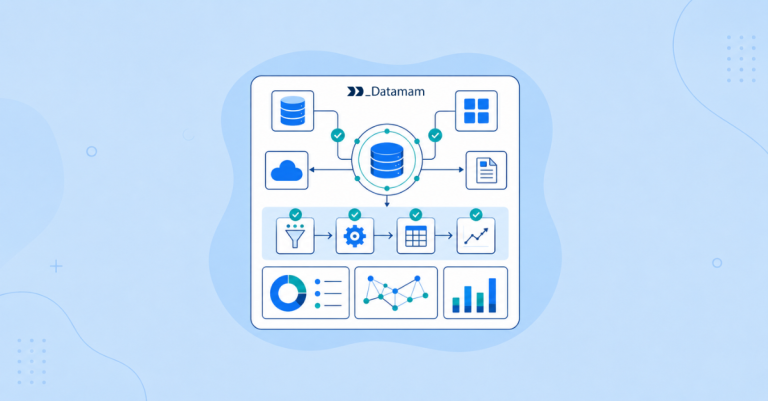
Unified Data Operations refers to the coordinated operating model that connects data movement, transformation, validation, storage, observability, governance, and ownership across the enterprise. It is not only an engineering concern. It determines whether information can move from source systems into analytics, AI workflows, operational applications, and executive reporting with enough consistency to support decisions at scale.
Unified Data Operations Determine Whether Enterprise Systems Can Work as One Environment
Most enterprises operate across many systems. CRM platforms hold customer relationships. ERP systems manage finance and operations. Product analytics platforms capture usage. Data warehouses and lakehouses support reporting. AI pipelines require training, inference, monitoring, and feedback loops. External data programs add market, competitor, regulatory, and public-source signals.
The challenge is no longer whether each system can perform its own function. The challenge is whether these systems can operate together. McKinsey’s State of AI 2025 notes that many organizations still struggle to embed AI deeply into workflows and processes despite broad adoption. That issue reflects a wider operational reality: enterprise value depends on connected workflows, not isolated data assets.
Integrated Data Workflows Reduce Delays Between Source Systems, Analytics, AI, and Business Processes
Integrated data workflows reduce the time between data creation, processing, analysis, and action. In a fragmented environment, data may move through manual exports, disconnected pipelines, inconsistent transformations, or team-specific reporting processes. Each handoff creates delay and interpretation risk.
For example, a pricing workflow may need competitor signals, inventory data, margin data, sales history, and demand indicators. If those inputs move through disconnected processes, pricing decisions become slower and less reliable. A customer health workflow may require CRM activity, support history, product usage, billing status, and external market signals. If those flows are not aligned, teams work from partial evidence.
In practice, integrated workflows allow data to support business processes while those processes are still active. Without integration, data arrives late, loses context, or requires manual reconciliation before it can be trusted.
Cross System Operations Require Shared Data Movement, Ownership, and Quality Expectations
Cross-system operations require more than connectivity. They require shared expectations for how data moves, who owns it, how quality is measured, when updates occur, and how downstream issues are escalated. A pipeline can connect systems technically while still failing operationally if ownership, definitions, and monitoring are unclear.
A customer record may move from CRM into a warehouse, then into a churn model, then into a customer success dashboard. Each step requires consistent identifiers, transformation logic, freshness expectations, access controls, and quality checks. If one team changes a field definition without notifying downstream users, the workflow may remain technically functional while decisions become less reliable.
Accordingly, unified operations depend on shared operating rules across systems. The goal is not simply to move data. The goal is to preserve meaning and accountability as data moves.
Why Fragmented Operations Create Hidden Enterprise Cost
Fragmented data operations create costs that are easy to underestimate. The enterprise may see platform costs, engineering costs, or analytics costs, but not always the hidden cost of reconciliation, delay, duplicated effort, incident response, and lost trust. These costs accumulate when teams operate their own workflows without shared alignment.
Gartner’s 2025 Data and Analytics Predictions state that by 2027, half of business decisions will be augmented or automated by AI agents for decision intelligence. As more decisions become AI-supported or automated, fragmented operations become more consequential because inconsistent data flows can influence business action before humans identify the underlying issue.
Teams Lose Time Reconciling Metrics, Pipelines, Definitions, and Workflow Dependencies
Fragmented operations force teams into repeated reconciliation. Analysts compare dashboards. Engineers trace pipeline failures. Business teams question definitions. AI teams investigate whether model behavior changed because of features, labels, source drift, or transformation logic. Governance teams reconstruct documentation after data has already moved.
This work is often treated as normal operating friction. However, at scale, it becomes a structural drag on enterprise performance. A metric dispute between sales and finance may consume leadership attention. A reporting delay may slow capital allocation. A model issue may require multiple teams to trace upstream dependencies.
Unified operations reduce this friction by making workflows, definitions, ownership, and dependencies visible before problems appear downstream.
Disconnected Operational Models Weaken Trust Even When Individual Systems Perform Well
Individual systems can perform well while the enterprise operating model remains weak. A warehouse may be stable. A CRM may be clean. A BI tool may refresh. An AI platform may produce outputs. However, if the workflows between those systems are disconnected, users may still distrust the overall data environment.
Trust weakens when teams cannot explain why metrics differ, where data changed, which source was used, or whether an output reflects the latest information. Once trust declines, teams create local workarounds: spreadsheets, side reports, private definitions, manual validations, and unofficial dashboards.
As a result, disconnected operations produce a paradox. The enterprise invests in more data capability, but teams rely more heavily on informal processes because the operating layer is not unified.
How Unified Data Management Improves Decision Reliability
Unified data management improves decision reliability by creating common standards for how data is defined, moved, stored, validated, governed, and consumed. It gives teams a shared operating model for data rather than forcing each function to interpret quality, ownership, and meaning independently.
IBM’s 2025 CDO Study reports that many Chief Data Officers say their data is not yet ready to unlock AI’s full potential. That readiness gap is not only about collecting more data. It is about making data operationally usable across workflows, systems, and governance boundaries. Connected data infrastructure benefits organizations by streamlining processes and enhancing collaboration across departments. With a robust data framework in place, companies can improve their analytical capabilities and drive better decision-making. This ultimately leads to a more agile and responsive business environment, poised to adapt to changing market conditions.
Shared Standards Help Data Move with Consistent Meaning Across Systems
Shared standards define how core entities, fields, identifiers, schemas, timestamps, taxonomies, and quality thresholds should be handled across systems. Without standards, each team may define customers, products, orders, revenue, regions, or market categories differently. Those differences then appear as conflicting reports or unstable model inputs.
For example, customer status should not mean one thing in CRM, another in billing, and another in customer success reporting. Product categories should not change meaning between internal catalogs, external marketplaces, and analytics models. Revenue timing should not differ across finance and executive reporting without clear documentation.
Unified operations make these definitions explicit. They allow data to move between systems without forcing every team to reinterpret meaning from scratch.
Governance, Metadata, and Lineage Make Operational Decisions More Defensible
Operational decisions become more defensible when teams can trace the data behind them. Metadata records source ownership, field definitions, update cadence, data classification, access rules, quality expectations, and business context. Lineage shows how data moved from source systems through transformations into models, dashboards, reports, APIs, and operational workflows.
Governance depends on this evidence. If a leadership report changes unexpectedly, lineage helps teams understand whether the change came from a source update, transformation rule, pipeline delay, or real business movement. If a model produces unexpected results, metadata can show whether the input data was current, complete, and authorized for use.
In this context, unified data management improves both speed and accountability. Teams can act faster because the evidence behind decisions is easier to verify.
The Strategic Impact of Integrated Data Workflows
Integrated data workflows have strategic value because they reduce the distance between signal and decision. Enterprises operate in environments where market conditions, customer behavior, supply constraints, financial pressure, regulatory expectations, and competitive activity change quickly. Data workflows must therefore support timely interpretation across functions.
The World Economic Forum’s 2025 analysis on scaling AI with strategy, data, and workforce readiness argues that strong data foundations are necessary to scale AI across enterprises. Integrated workflows are part of those foundations because AI cannot operate reliably when upstream data movement is fragmented. Data integration for enterprise solutions is critical in providing accurate, real-time insights that drive business success. By standardizing data formats and ensuring seamless transfers, companies can leverage their information assets more effectively. This approach enhances collaboration among teams and accelerates the pace of innovation.
AI, Analytics, and Reporting Systems Become More Stable When Workflows Are Aligned
AI, analytics, and reporting systems depend on aligned workflows. Also, AI models need consistent training data, feature pipelines, feedback loops, and monitoring inputs. Analytics teams need dependable transformations, source freshness, and metric definitions. Reporting systems need data that arrives with consistent context and timing.
When workflows are aligned, downstream systems become more stable. A feature pipeline is less likely to drift silently. A dashboard is less likely to show contradictory metrics. A report is easier to audit. A pricing model can combine internal and external data without losing context.
By contrast, fragmented workflows create hidden instability. Outputs may look structured, but the operating model behind them may be brittle. Unified operations reduce that risk by making data movement and workflow dependency more consistent.
Business Teams Gain Faster Access to Trusted Inputs Across Functions
Business teams need access to trusted inputs across functions, not only within their own systems. Sales need product usage and billing context. Finance needs operational and revenue data. Product teams need customer and market context. Risk teams need internal controls and external regulatory signals. Strategy teams need internal performance data connected to market movement.
Unified operations reduce the delay between request and usable data. Teams do not need to rebuild logic repeatedly, reconcile definitions manually, or wait for ad hoc extracts. Instead, governed workflows make trusted data available through shared models, validated pipelines, and documented access paths.
Ultimately, this improves decision velocity. Teams can spend more time interpreting business conditions and less time assembling evidence.
The Infrastructure Layer Behind Unified Data Operations
Unified data operations require infrastructure that coordinates orchestration, transformation, storage, validation, observability, governance, and delivery. Point tools alone do not create unified operations. The enterprise needs an operating layer where systems function together and where dependencies are visible.
NIST’s AI Risk Management Framework emphasizes governance, mapping, measurement, and management across AI risk. Those same functions apply to data operations because AI and analytics systems inherit risk from how data is sourced, transformed, moved, and monitored. Data flow alignment challenges in business can significantly impact decision-making and operational efficiency. Organizations must address these challenges to ensure seamless data integration across various platforms. By implementing robust governance frameworks, businesses can improve their data flows and enhance overall performance.
Orchestration, Transformation, Storage, and Observability Must Function as a Coordinated Layer
Airflow can orchestrate scheduled ingestion, transformation, validation, and delivery workflows. Kafka can support event-driven movement for streaming or near-real-time use cases. Spark can process large-scale datasets across distributed environments. dbt can structure transformation logic into governed, documented models.
Storage and analytics platforms such as Snowflake, BigQuery, and Databricks provide scalable environments for integrated data. However, these systems need shared standards for schemas, models, ownership, and quality checks to support unified operations. Otherwise, the organization may centralize data without aligning its meaning.
External data adds complexity. Playwright and other browser automation frameworks may be required when market or public-source signals are not available through stable APIs. Those workflows must still be integrated into the same operational model, including monitoring, metadata, lineage, and compliance review.
Monitoring and Versioning Help Teams Detect Operational Drift Before Decisions Are Affected
Operational drift occurs when workflows gradually move away from expected behavior. A source changes structure. A pipeline slows down. A transformation rule becomes outdated. A model input loses freshness. A report begins using a field differently from its original definition. These changes may not trigger immediate failure, but they weaken decision reliability over time.
Monitoring systems such as Prometheus can track freshness, latency, volume, failures, and workflow health. Data quality systems such as Great Expectations can validate schema, completeness, uniqueness, and anomaly patterns. Versioning preserves changes in datasets, transformations, schemas, and business logic.
These controls help teams detect drift before it affects critical decisions. They also make incident response faster because teams can compare current workflows against prior operating states.
Governance and Compliance Depend on Unified Operations
Governance and compliance become harder when operations are fragmented. Data may move between systems without consistent documentation, access control, usage rules, audit logs, or retention policies. As enterprises integrate internal systems, external sources, cloud platforms, vendors, and AI workflows, governance must be embedded into operations rather than handled as a separate review layer.
The World Bank’s Digital Progress and Trends Report 2025 emphasizes the role of foundational digital systems in responsible and scalable AI adoption. Within enterprises, unified operations are part of that foundation because responsible AI and analytics require traceable, governed, and reliable data movement.
Auditability Requires Operational Traceability Across the Data Lifecycle
Auditability depends on traceability. Teams must be able to show where data came from, how it changed, who accessed it, which rules were applied, and where it was used. In fragmented operations, this evidence may be scattered across source systems, pipelines, warehouses, dashboards, model registries, and local documentation.
Unified operations make auditability more practical. Metadata systems, lineage tools, access controls, data catalogs, validation logs, and workflow histories create a defensible record of data movement and use.
This matters for financial reporting, regulated workflows, customer data, AI governance, external data sourcing, and cross-border data movement. A decision system is easier to defend when its data lifecycle is visible.
Cross-System Operations Need Legal, Sourcing, and Access Controls
Cross-system operations often involve sensitive or regulated data movement. Customer data may carry privacy obligations. External data may require sourcing review and platform policy awareness. Cross-border workflows may involve data residency, transfer, retention, and access considerations. Vendor data may include contractual usage constraints.
Unified operations help ensure that these controls move with the data. A dataset approved for analytics may not automatically be appropriate for AI training. A source approved in one jurisdiction may need restrictions in another. A vendor feed may require access controls or usage limits downstream.
Accordingly, unified operations are not only about efficiency. They are also a compliance architecture requirement.
Why Unified Data Operations Are Becoming an Executive Priority
Unified Data Operations are becoming an executive priority because enterprise performance increasingly depends on connected data workflows. Leaders rely on data to guide revenue decisions, customer strategy, risk monitoring, pricing, product planning, supply chain visibility, AI investment, and market intelligence. If the data operating model is fragmented, leadership decisions become slower and less reliable.
Executives do not need to manage pipelines directly. However, they do need visibility into the operating systems that support critical decisions. Which workflows feed executive reporting? Which data flows support AI models? Also, which systems require manual reconciliation? Which external data signals are integrated into planning? Which workflows lack ownership or monitoring?
Leaders Need Visibility into Cross-System Operations That Support Critical Decisions
Leadership visibility should focus on critical workflows. A revenue workflow may depend on CRM, ERP, billing, product usage, and external market signals. A risk workflow may depend on internal controls, vendor data, public records, and regulatory sources. An AI workflow may depend on feature pipelines, training datasets, model monitoring, and feedback loops.
If these workflows are not unified, leaders need to know where the exposure sits. A disconnected process may create reporting delay, model instability, compliance risk, or decision latency. Visibility helps executives prioritize infrastructure investment where fragmented operations create the highest business risk.
In practice, cross-system operations become part of executive risk management. The organization cannot scale decisions on top of workflows it cannot see.
Scalable Data Programs Require Shared Ownership, Operating Standards, and Continuous Alignment Review
Scalable data programs require shared ownership across engineering, analytics, business, governance, AI, legal, compliance, and operations teams. Data engineering may operate pipelines, but business teams define meaning. Governance teams define controls. AI teams define model input requirements. Analytics teams define reporting logic. Legal and compliance teams define usage boundaries.
Operating standards should define data contracts, schemas, ownership, quality thresholds, refresh cadence, lineage requirements, monitoring expectations, access controls, and escalation procedures. Continuous alignment review ensures those standards remain relevant as sources, systems, regulations, and business priorities change.
Ultimately, Unified Data Operations matter more than teams expect because they determine whether enterprise data can function as infrastructure. Integrated data workflows reduce delay. Unified data management preserves meaning. Cross-system operations make critical workflows more reliable, traceable, and governed.
Organizations that unify data operations will build stronger AI, analytics, reporting, and operational decision environments. Those that rely on disconnected workflows may continue investing in platforms, but they will struggle to turn those platforms into a coherent enterprise data capability.