Key Takeaways
- Data Flow Alignment determines whether information can move across systems without losing meaning, timing, or trust.
- Cross-system alignment reduces contradictory metrics, delayed reporting, and duplicate operational work.
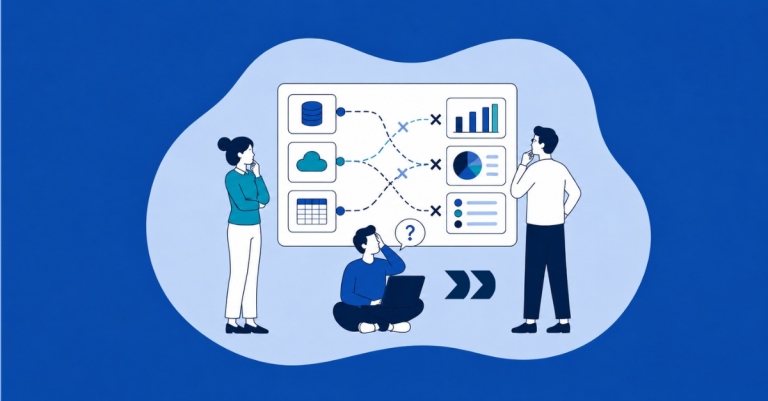
- Data flow mapping helps teams identify where data changes, stalls, fragments, or becomes unreliable.
- Process data alignment is becoming essential as AI, analytics, and operational workflows depend on connected systems.
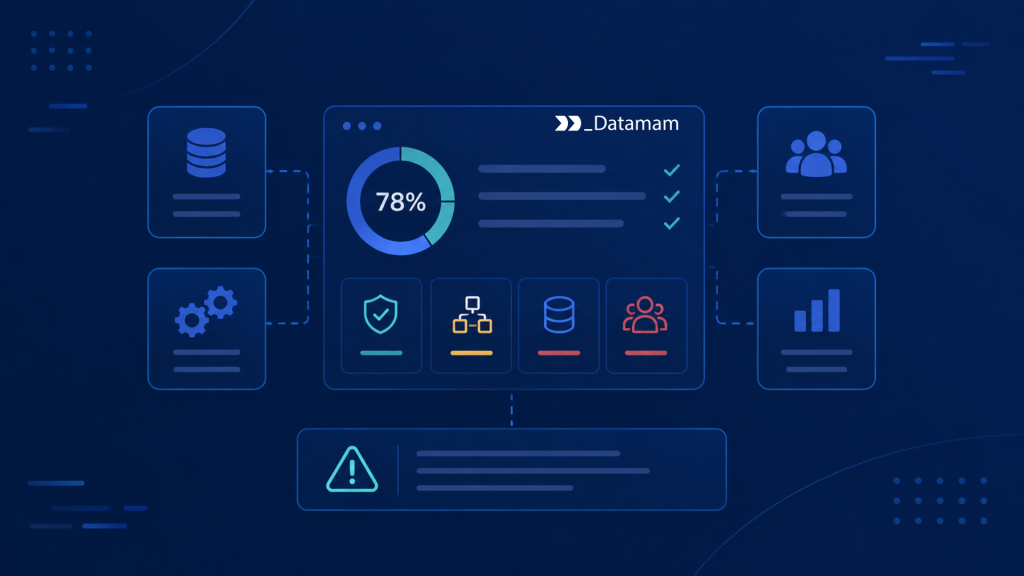
Enterprise data programs rarely fail because one system is missing. They fail because systems do not move data in the same direction, at the same rhythm, with the same meaning. A warehouse may be well designed, a CRM may be structured, an ERP may contain reliable operational data, and an external data pipeline may deliver useful signals. However, if the flows between those systems are misaligned, the enterprise still operates from inconsistent views of reality.
Data Flow Alignment refers to the discipline of ensuring that data moves across systems, teams, workflows, and decision environments with consistent structure, timing, definitions, ownership, and quality expectations. As organizations rely more heavily on AI, automation, analytics, and cross-functional reporting, weak alignment becomes an executive concern because disconnected flows create downstream decision risk.
Data Flow Alignment Now Defines Whether Systems Can Operate Together
Most enterprises have invested heavily in platforms. They have CRM systems, ERP systems, data warehouses, BI tools, cloud storage, application databases, customer platforms, operational software, and external data feeds. However, platform maturity does not guarantee system alignment. The problem appears when data moves between systems but loses consistency along the way.
McKinsey’s State of AI 2025 describes a market in which AI adoption continues to expand, while achieving scaled impact remains difficult for many organizations. One reason is that enterprise workflows depend on data moving across functions rather than remaining isolated within individual systems. Data integration strategies across platforms are critical for maintaining data consistency. Organizations that prioritize these strategies can streamline their workflows and enhance overall efficiency. By ensuring seamless data flow, they can leverage their technological investments more effectively, leading to improved decision-making and competitive advantage.
Cross-System Alignment Reduces Contradictory Metrics and Operational Friction
Cross-system alignment ensures that data retains consistent meaning as it moves between systems. A customer record in CRM should connect logically with billing data in ERP, support activity in a customer service platform, product engagement data in analytics, and external market signals in intelligence workflows. If these systems use different identifiers, definitions, update schedules, or transformation rules, teams begin working from conflicting information.
This creates operational friction. Sales may report one customer count. Finance may report another. Operations may see different order status values. Marketing may segment customers using attributes that are not synchronized with revenue systems. Leadership may receive dashboards that appear authoritative but disagree at the metric level.
Accordingly, data alignment is not only an integration issue. It is a business coordination issue.
Weak Flow Design Creates Decision Risk Before Data Reaches the Dashboard
Weak data flow design creates risk before information appears in reports. A pipeline may load data successfully while still misaligning timestamps, entity IDs, source definitions, currency fields, regional classifications, or lifecycle stages. The dashboard may refresh, but the underlying meaning may be inconsistent across systems.
This is especially important when operational decisions depend on multiple systems. Pricing decisions may combine competitor data, inventory data, sales data, and margin data. Forecasting may combine demand signals, historical transactions, supply constraints, and external market movement. Customer 360 programs may combine CRM, support, web, purchase, and engagement data.
In practice, weak alignment turns connected systems into unreliable decision environments. The issue is not whether data was moved. The issue is whether it arrived with the right meaning.
Why Misaligned Data Flows Become More Expensive at Scale
Small alignment issues can become expensive when data programs scale across departments. A field mismatch in one workflow may be manageable. The same mismatch across dozens of reports, models, and operational systems becomes a recurring source of rework. Teams spend time reconciling differences rather than using data to make decisions.
Gartner’s 2025 Data and Analytics Predictions state that by 2027, half of business decisions will be augmented or automated by AI agents for decision intelligence. As more decisions become automated or AI-supported, misaligned data flows become more dangerous because defects can influence decisions before teams detect the inconsistency. Data integration challenges for companies can hinder the effectiveness of AI decision-making systems. Organizations must prioritize data accuracy and consistency to fully leverage these technologies. As dependency on automated insights grows, addressing integration issues will be crucial for ensuring that businesses make informed choices.
Data Flow Mapping Shows Where Information Changes, Stalls, or Fragments
Data flow mapping identifies how information moves from source systems into pipelines, warehouses, models, dashboards, applications, and business processes. It shows where data is created, transformed, enriched, joined, validated, delayed, or consumed. Without this map, teams may know that data exists but not understand where it changes.
A useful map should show source ownership, transformation logic, timing dependencies, system handoffs, schema changes, validation points, quality checks, and downstream consumers. It should also distinguish between batch workflows, streaming workflows, manual exports, API connections, vendor feeds, and external data collection pipelines.
This visibility helps teams locate alignment problems. If revenue figures differ between finance and sales dashboards, the organization can trace where definitions diverged. If model features become stale, teams can identify whether the delay came from the source, pipeline, transformation layer, or target system.
Process Data Alignment Prevents Workflow-Level Inconsistency
Process data alignment connects data flows to business processes. A workflow may involve several systems, but the process should operate with consistent data definitions and timing. Order management, supplier coordination, customer onboarding, pricing updates, risk monitoring, and product catalog synchronization all require aligned data movement.
When process data is misaligned, teams experience operational inconsistency. An order may appear fulfilled in one system and pending in another. A supplier record may be active in procurement but inactive in finance. A customer may be segmented as high value in marketing but treated as inactive in support. A product may be updated in the catalog but not synchronized with marketplace listings.
Ultimately, data flow alignment must be evaluated through the business process it supports. Technical movement alone is not enough.
The Strategic Impact of Weak Cross-System Alignment
Weak cross-system alignment reduces trust in enterprise data. The organization may have sophisticated tools, but users begin questioning whether the data reflects the business accurately. Once trust declines, teams create manual checks, parallel spreadsheets, local definitions, and informal reporting processes. This weakens the enterprise data strategy from within.
IBM’s 2025 CDO Study emphasizes the need for decision-ready data as organizations pursue AI-driven transformation. Decision-ready data depends on connected systems that preserve meaning, quality, and governance across the data lifecycle. Effective enterprise data delivery solutions enable organizations to streamline their workflows and enhance collaboration. By investing in these solutions, companies can ensure that all teams have access to reliable data, promoting a culture of trust and accuracy. This trust fosters innovation and allows organizations to leverage their data as a strategic asset for informed decision-making.
Misalignment Creates Multiple Versions of Operational Truth
Multiple versions of truth emerge when systems define the same object differently. A customer, supplier, product, transaction, account, region, or order may have different meanings across platforms. These differences may be caused by legacy system design, acquisitions, local business rules, incomplete synchronization, or inconsistent transformation logic.
The result is not only reporting confusion. It affects execution. Finance may reconcile figures manually. Sales may challenge revenue attribution. Product teams may analyze incomplete usage data. Operations may make inventory decisions using delayed or inconsistent feeds.
At scale, the cost compounds. The organization spends more time explaining data differences than acting on insights. Executive decision velocity slows because leadership cannot easily determine which system should be trusted.
AI and Analytics Systems Amplify Weak Alignment
AI and analytics systems amplify the conditions of the data they receive. If flows are misaligned, models may learn from inconsistent labels, outdated features, duplicated records, or mismatched entities. Dashboards may show accurate calculations based on poorly aligned inputs. Forecasts may reflect timing mismatches rather than real changes in demand.
This risk is harder to see because AI and analytics outputs can appear precise. A model may generate a probability score. A dashboard may show a clean trend line. A report may present a structured recommendation. However, if the underlying flows are not aligned, precision does not equal reliability.
Therefore, system alignment must be treated as a prerequisite for enterprise AI and analytics maturity.
The Infrastructure Layer Behind Stronger Data Flow Alignment
Data flow alignment requires infrastructure that can coordinate movement, transformation, validation, lineage, and monitoring across systems. Individual connectors are not enough. Enterprises need a consistent operating layer that makes flows observable, traceable, and governable across internal and external systems.
NIST’s AI Risk Management Framework emphasizes governance, mapping, measurement, and management as core functions for trustworthy AI. Those same principles apply to data flows because AI systems inherit risk from the way data is sourced, transformed, and delivered.
Orchestration, Streaming, and Transformation Systems Must Preserve Meaning
Airflow can orchestrate scheduled workflows across systems. Kafka can support event-driven data movement when real-time or near-real-time alignment is required. Spark can process large-scale datasets across distributed environments. dbt can structure transformations into governed models with clearer dependencies and documentation.
Storage and analytics platforms such as Snowflake, BigQuery, and Databricks can support centralized analysis, lakehouse architectures, and scalable transformation workflows. However, these systems only support alignment when teams define shared rules for identity, schema, timestamp handling, entity resolution, quality checks, and business logic.
External data adds another layer of complexity. Playwright and other browser automation frameworks may be needed when important signals do not exist through stable APIs. Those flows must still align with internal systems, but external market signals remain disconnected from operational context.
Validation, Observability, and Lineage Reduce Silent Flow Failure
Silent failure occurs when data flows continue operating but no longer deliver trustworthy outputs. A schema change, a field becomes null, a join key loses consistency, a source stops updating, or a transformation rule no longer reflects the business process. The pipeline may still run, but the decision environment becomes weaker.
Validation tools such as Great Expectations can test schema, completeness, uniqueness, field ranges, and anomaly patterns. Observability systems such as Prometheus can monitor freshness, latency, volume, failure rates, and pipeline health. Data lineage tools show how information moves from source systems through transformations into downstream dashboards, models, APIs, and reports.
Together, these capabilities make alignment measurable. They help teams detect when flows drift away from expected behavior and identify which downstream systems are affected.
Governance and Compliance Depend on Aligned Data Movement
Governance becomes difficult when data movement is unclear. If teams cannot trace how data moved between systems, they cannot confidently answer questions about origin, transformation, access, usage, retention, or decision impact. As data moves through AI systems, reporting environments, cloud platforms, and external integrations, auditability becomes essential.
The NIST AI RMF’s emphasis on risk mapping and measurement is relevant because data governance requires evidence. Organizations need to know not only what data exists, but how it flows, where it changes, and who depends on it.
Auditability Requires Consistent Flow Documentation
Auditability depends on documentation that links sources, transformations, owners, validation rules, and downstream usage. A governed data flow should show where data originated, when it was updated, which rules were applied, which systems consumed it, and whether quality checks passed.
This is especially important in regulated or compliance-sensitive environments. Customer data, supplier data, financial data, health-related data, and cross-border external data may carry different obligations. Teams need access controls, retention rules, audit logs, consent awareness, sourcing documentation, and legal review where appropriate.
Without consistent documentation, governance becomes reactive. Teams investigate after issues occur rather than preventing control before data is used.
Cross-Border and External Data Flows Require Stronger Alignment Controls
Cross-border data flows introduce additional alignment challenges. Data may move across jurisdictions, cloud regions, vendors, and business units. Legal requirements, data residency expectations, platform terms, privacy obligations, and sourcing rules may vary across environments.
External data flows also require controls around permissible use, source stability, collection method, and downstream distribution. A source may be technically accessible but restricted for certain use cases. Another may be usable for analytics but inappropriate for AI training. These distinctions must be captured in metadata and enforced through governance workflows.
Consequently, alignment is not only structural. It is legal, operational, and strategic.
Why Data Flow Alignment Is Becoming an Executive Priority
Data flow alignment is becoming an executive priority because enterprise performance increasingly depends on connected systems. Leaders rely on information moving accurately across revenue operations, finance, supply chain, product, marketing, risk, compliance, and AI workflows. When those flows are misaligned, the business becomes slower and less confident.
Executives do not need to manage every pipeline. However, they do need visibility into critical flow dependencies. Which data flows support revenue reporting? Which feed AI models? Also, which connect ERP and CRM systems? Which external data flows support market intelligence? Which processes still depend on manual exports or undocumented transformations?
Leaders Need Visibility into Flow Dependencies Across Critical Decisions
Flow dependency visibility helps leaders understand where the organization is exposed. A pricing workflow may depend on aligned flows between competitor data, product catalogs, inventory systems, and margin data. A customer reporting workflow may depend on aligned identity data across CRM, billing, support, and analytics systems. An AI feature pipeline may depend on external signals, internal transactions, and governed transformations.
When leaders understand these dependencies, they can prioritize investment where misalignment creates the most business risk. Critical flows may need stronger monitoring, data contracts, ownership, lineage, and escalation procedures. Lower-risk workflows may require lighter controls.
In this context, alignment becomes a capital allocation issue. It determines where data infrastructure investment reduces the greatest operational and decision risk.
Scalable Data Programs Require Alignment Standards, Ownership, and Continuous Review
Scalable data programs need alignment standards. These standards should define common identifiers, source-to-target mapping rules, schema expectations, validation thresholds, transformation ownership, refresh cadence, data contracts, lineage requirements, and escalation procedures.
Ownership is equally important. Data engineering may operate pipelines, but business teams define process meaning. Governance teams define control requirements. Analytics teams define reporting needs. AI teams define model input requirements. Legal and compliance teams define usage constraints. Without shared ownership, alignment problems remain unresolved between functions.
Ultimately, Data Flow Alignment determines whether enterprise systems can operate as a connected decision environment. Cross system alignment reduces contradictory metrics and operational friction. Data flow mapping reveals where information changes, stalls, or fragments. Process data alignment ensures that workflows rely on consistent, trusted inputs.
Organizations that treat flow alignment as infrastructure will build stronger AI, analytics, and operational systems. Those that treat integration as simple connectivity may continue moving data, but they will struggle to prove that the data arriving downstream still means what the business thinks it means.