Key Takeaways
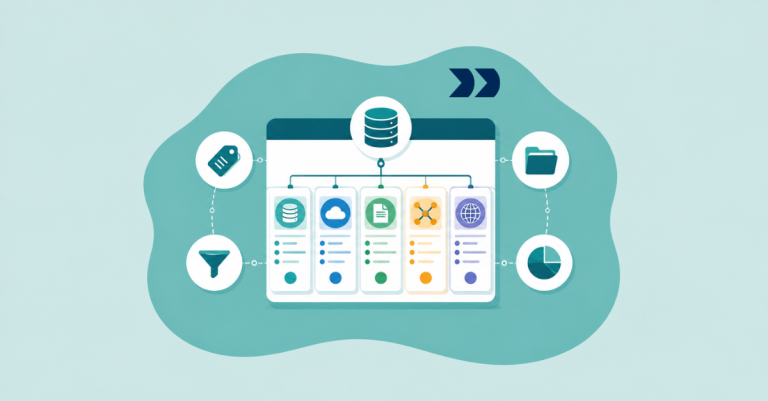
- Source Classification Models help enterprises organize external data sources by origin, authority, access method, role, risk, and business use.
- A source classification framework reduces operational confusion by defining how sources should be evaluated, accessed, refreshed, governed, and monitored.
- Data source categories should distinguish public sources, vendor feeds, partner datasets, APIs, web-based sources, internal reference sources, and derived sources.
- Source type mapping connects each source category to quality controls, refresh planning, coverage expectations, and governance requirements.
- Reliable source classification requires metadata catalogs, ownership records, review cycles, audit trails, access controls, and source accountability.

External data operations become difficult to manage when every source is treated as a generic input. Public records, vendor feeds, partner datasets, marketplace pages, APIs, web-based sources, internal reference files, and derived datasets do not carry the same authority, access requirements, quality risks, or governance obligations. If they are not classified clearly, downstream systems may treat fundamentally different source types as equivalent.
Source Classification Models provide the structure for organizing external sources into meaningful operational categories. They define what a source is, how it should be evaluated, what role it plays, which controls apply, and how it connects to business use cases.
In enterprise data sourcing, source classification is not a taxonomy exercise for documentation. It is an infrastructure control. It determines how sources are onboarded, monitored, refreshed, scored, governed, and trusted across market intelligence, AI workflows, compliance monitoring, procurement analysis, pricing systems, and executive reporting.
Why Source Classification Models Matter in Data Sourcing
Source Classification Models matter because external data sources behave differently. A government registry may be authoritative but slow to update. A vendor feed may be structured but opaque. A marketplace page may be current but unstable. A partner dataset may be high context but contractually restricted. A derived dataset may be useful, but dependent on upstream assumptions.
According to Gartner’s 2025 data and analytics trends, data and analytics are expanding from specialized teams into broader organizational use, which raises the pressure on governance, reliability, and operational control. Source classification gives enterprises a way to control external inputs before those inputs spread across the organization.
Why External Sources Need Structured Classification
External sources need structured classification because source type shapes operational risk. A public agency source may require auditability and historical retention. A vendor feed may require third-party risk review. A web-based source may require stronger monitoring for structural change. An API source may require rate-limit planning and version control. A derived source may require lineage back to original records.
Without classification, teams may apply the wrong controls. A source may be refreshed too frequently, trusted too strongly, used beyond its rights, or integrated into workflows where its authority is insufficient. Classification prevents these mistakes by assigning each source to an operational category with defined expectations.
In practice, Source Classification Models create the first layer of source governance. They tell the organization what kind of source it is dealing with before deeper coverage, quality, vendor, or access assessments occur.
How Poor Source Classification Creates Operational Confusion
Poor classification creates confusion across engineering, analytics, governance, procurement, and business teams. One team may treat a vendor dataset as authoritative because it arrives in a clean format. Another may treat a public web source as current because it updates frequently. A third may use a derived dataset without realizing it depends on stale upstream inputs.
This confusion spreads downstream. Dashboards may combine source types without showing the source authority. AI workflows may train on mixed sources without preserving origin. Compliance workflows may rely on aggregated data when original records are required. Market intelligence teams may compare direct source observations against vendor-normalized values as if they were equivalent.
IBM’s 2025 CDO Study frames decision-ready data as central to enterprise AI and data strategy. Source classification supports decision-ready data by clarifying which external inputs are authoritative, supplemental, restricted, volatile, or derived before they enter operational systems.
Building a Source Classification Framework
A source classification framework defines the criteria used to categorize external sources. It should be practical enough for operational use and precise enough to support governance. The framework should not only label sources by format. It should classify them by origin, authority, role, access method, stability, rights, and downstream dependency.
A good framework helps teams answer: What type of source is this? What can it be used for? What controls apply? How should it be monitored? Which risks are associated with this source category?
Defining Classification Criteria by Source Origin, Authority, and Access Method
Source origin describes where the data comes from. It may originate from a public authority, commercial vendor, marketplace, platform, partner, internal reference system, user-generated environment, or derived analytical process. Origin matters because it influences source credibility and usage rights.
Source authority describes how trusted the source is for a specific signal. A regulator may be authoritative for filings but not for market pricing. A brand site may be authoritative for official product specifications, but not for street price. A marketplace may be current for offers but less authoritative for manufacturer metadata.
Access method describes how the source is reached: API, file delivery, direct web access, database share, partner feed, vendor export, or manual collection. Access method affects refresh planning, monitoring, authentication, rate limits, and reliability controls. A source classification framework should combine all three dimensions rather than relying on a single label.
Separating Strategic, Supporting, Validation, and Backup Sources
Source role is another classification dimension. Strategic sources directly support critical workflows. Supporting sources provide context or enrichment. Validation sources help confirm or reconcile other sources. Backup sources support continuity when primary sources fail.
This distinction helps teams assign controls appropriately. Strategic sources may require strict monitoring, ownership records, refresh logs, and continuity planning. Supporting sources may require documentation and periodic review. Validation sources should be evaluated for independence. Backup sources should be tested to confirm they can actually support recovery.
Separating source roles also helps prevent overreliance on one source type. A sourcing program may appear diverse because it has many sources, but if most are supporting sources, critical workflows may still depend on a small number of strategic inputs.
Aligning Source Classification with Business Use Cases
Source classification should connect to business use cases. A source category is only useful if it helps teams decide how the source can be used. Pricing intelligence, procurement risk, compliance monitoring, AI training, market research, and executive reporting all have different source requirements.
For example, a source may be acceptable for exploratory market research but unsuitable for automated pricing decisions. A vendor-normalized dataset may be useful for high-level analysis but not for audit-sensitive compliance reporting. A public source may be authoritative, but too slow for operational alerts.
Classification should therefore include use-case eligibility. Teams should know whether a source is approved for reporting, benchmarking, training, validation, monitoring, enrichment, or compliance workflows.
Data Source Categories in Enterprise Sourcing Programs
Data source categories define the major groups of sources used in external data operations. These categories should be consistent across sourcing, engineering, analytics, and governance teams. If each team uses different definitions, source oversight becomes fragmented.
The categories should reflect operational meaning rather than only technical format. A file from a vendor and a file from a public agency are not the same source category, even if both arrive as CSV files. Data sourcing for external data infrastructure is essential for maintaining comprehensive oversight. Properly categorizing these sources enhances the ability to analyze and leverage data effectively. This process also promotes better collaboration between teams, leading to unified strategies across the organization.
Classifying Public, Vendor, Partner, API, Web, and Internal Reference Sources
Public sources include government portals, regulatory filings, public registries, open datasets, public procurement records, and official publications. They often carry strong authority but may vary in structure, cadence, and accessibility.
Vendor sources include commercial providers, data brokers, managed feeds, aggregators, and enrichment services. They may provide scale and convenience but require vendor assessment, transparency review, and rights validation. Partner sources include datasets shared through commercial, ecosystem, or operational relationships. They may be high value but often carry access and use restrictions.
API sources provide structured access through defined endpoints. Web-based sources may provide broad coverage but require more monitoring. Internal reference sources help standardize external data through entity lists, taxonomies, source registries, or approved business definitions. Each category requires different controls.
Distinguishing Authoritative Sources from Aggregated or Derived Sources
Authoritative sources are closest to the original event, entity, or record. Aggregated sources combine multiple upstream inputs. Derived sources transform, infer, enrich, or model data from other sources. These distinctions are critical.
Aggregated and derived sources can be highly useful, but they should not be treated as raw evidence unless their upstream sources and transformation logic are understood. A vendor score may be derived from multiple records. A market signal may be inferred from observed changes. A risk indicator may depend on proprietary weighting.
The OECD.AI 2025 Data Governance Working Group Report highlights technical, legal, and institutional dimensions of data governance. Distinguishing original, aggregated, and derived sources supports those governance dimensions because it helps teams understand origin, transformation, and suitability for use.
Managing Source Categories Across Markets, Regions, and Domains
Source categories may behave differently across markets, regions, and domains. A public registry in one country may be highly structured and current, while another may be incomplete or delayed. A vendor may provide strong coverage in mature markets but weak coverage in emerging regions. A marketplace source may vary by language, geography, seller type, or platform rules.
Source Classification Models should allow regional and domain-specific metadata. A source should not be classified only once globally if its behavior differs across markets. Classification may need local notes, usage restrictions, authority ratings, or refreshed expectations.
This prevents teams from assuming that a source category performs consistently everywhere. Classification becomes more accurate when it reflects the real operating context.
Source Type Mapping for External Data Operations
Source type mapping connects source categories to operational controls. It translates classification into action. Once a source is classified, teams should know which access model, refresh cadence, quality checks, monitoring rules, governance controls, and usage limits apply.
Without source type mapping, classification remains descriptive. With mapping, it becomes operational.
Mapping Source Types to Refresh Cadence, Access Method, and Reliability Controls
Different source types require different refresh and access strategies. API sources may support incremental refreshes but require rate-limit management. Vendor file feeds may refresh on fixed schedules and require delivery monitoring. Public web sources may need structure-change detection. Partner sources may require access permission checks and contractual review.
Reliability controls should also vary by type. Strategic vendor feeds may require SLAs and incident escalation. Public sources may require independent monitoring and archival capture. Derived sources may require lineage checks. Backup sources may require periodic activation testing.
Source type mapping makes these expectations explicit. It reduces the risk of applying generic controls that do not fit the source.
Connecting Source Types to Quality, Coverage, and Governance Requirements
Source type affects quality expectations. Public sources may be authoritative but inconsistent in format. Vendor sources may be normalized but less transparent. Web-based sources may be current but structurally unstable. Derived sources may be useful, but dependent on upstream assumptions.
Coverage expectations also vary. Vendor sources may provide broad coverage but require verification. Public sources may provide official records, but limited scope. Partner sources may provide deep coverage in narrow domains.
Governance requirements should reflect these differences. KPMG’s 2025 third-party security considerations describes third-party security as a more central and strategic enterprise risk as organizations rely on more vendors and services. Vendor and partner source types should therefore carry stronger third-party oversight than public source categories.
Identifying Category-Level Risks Before Downstream Integration
Source categories carry predictable risks. API sources may fail because of version changes or rate limits. Vendor sources may create dependency or transparency gaps. Public sources may change publication structure. Web sources may degrade when layouts change. Derived sources may obscure assumptions. Partner sources may create access or usage restrictions.
Identifying these risks before integration helps teams design better controls. A source type risk register can define expected failure modes, monitoring requirements, escalation paths, and review frequency.
This is particularly important when sources feed AI systems, market intelligence, compliance monitoring, or executive reporting. Category-level risks should be understood before source data becomes embedded into decision workflows.
Operational Controls for Source Classification
Source classification must be maintained. Sources change over time. A vendor may add derived attributes. A public source may introduce an API. A partner feed may expand usage restrictions. A web source may become a formal vendor feed. If classification is not updated, controls may become misaligned.
Operational controls keep classification accurate across the source lifecycle. Enterprise data sourcing strategies are essential for managing the complexities of source integration. They provide a framework for evaluating the reliability and relevance of each source over time. Effective strategies ensure that data remains accurate and compliant with evolving requirements. Coverage mapping for external data sourcing is crucial in identifying appropriate sources. It allows organizations to visualize data provenance and ensure comprehensive coverage throughout the sourcing process. By implementing such mapping, businesses can enhance their decision-making and maintain compliance across diverse data streams.
Maintaining Classification Rules as Sources Change
Classification rules should define how source categories are assigned, reviewed, and updated. These rules should include criteria for source origin, authority, access method, role, rights, and usage eligibility. When a source changes, the classification should be reviewed.
For example, if a vendor begins providing inferred scores instead of raw records, the source may need additional derived-source controls. If a public agency introduces a structured API, access method metadata should change. If a supporting source becomes critical to a dashboard, its role should be updated to strategic.
Maintaining classification rules prevents stale metadata from creating governance gaps.
Reviewing Source Category Accuracy Across the Data Lifecycle
Source category accuracy should be reviewed during onboarding, integration, periodic assessment, and retirement. Onboarding establishes the initial classification. Integration confirms whether the classification matches real data behavior. Periodic assessment checks whether the source has changed. Retirement records why the source is no longer active.
Review should involve data engineering, governance, business owners, and procurement, where relevant. The classification should not be owned only by one team because the source type affects technical, legal, operational, and business decisions.
A reviewable classification lifecycle supports auditability. Teams can explain why a source was classified a certain way and which controls applied.
Technology and Integration Considerations
Source Classification Models need technology support to remain useful at scale. Source categories should be stored as metadata, connected to data catalogs, and visible in downstream systems. If classification lives only in a spreadsheet, it becomes outdated quickly.
Technology should make source classification discoverable, queryable, and linked to operational workflows.
Using Metadata Catalogs and Source Registries for Classification Visibility
Metadata catalogs and source registries should store classification attributes such as source type, origin, authority level, access method, role, owner, usage rights, refresh cadence, coverage scope, and risk rating. These attributes should be standardized so teams can compare sources consistently.
A source registry helps teams avoid duplicate source onboarding and unmanaged source growth. It also allows analysts and engineers to understand the source context before using a dataset. If a table is built from vendor-derived sources, users should see that. If a dataset includes public authoritative records, those should be visible.
Classification visibility improves data trust because users can understand what kind of external inputs they are consuming.
Connecting Classification Metadata to Warehouses, BI, AI, and Governance Systems
Classification metadata should connect to Snowflake, BigQuery, Databricks, BI dashboards, AI workflows, and governance platforms. When a dataset is consumed, its source type should remain visible through lineage and metadata.
Airflow can use source classification to route workflows differently. API sources may follow one refresh pattern. Vendor feeds may follow another. dbt can document source classifications in transformation models. Prometheus can monitor source-type-specific reliability metrics. Data catalogs can expose classification to business users.
This connection turns classification into operational infrastructure. Source type becomes a factor in refresh planning, validation rules, access control, lineage, and downstream trust.
Governance and Compliance in Source Classification Models
Source classification has governance and compliance implications because source type affects usage rights, access controls, privacy considerations, auditability, and accountability. A public source, vendor source, partner source, and derived source may require different review procedures.
Governance should define who can classify sources, approve category changes, and use sources in sensitive workflows.
Managing Ownership, Access Rights, Usage Restrictions, and Source Accountability
Each source should have an owner responsible for classification accuracy. Ownership may involve business, technical, procurement, legal, and governance stakeholders. The owner should ensure that classification metadata remains current and that usage aligns with approved rules.
Access rights and usage restrictions should be tied to the source category. Vendor and partner sources may have contractual limitations. Public sources may have usage expectations or jurisdiction-specific rules. Derived sources may have restrictions based on upstream inputs.
Source accountability means teams can explain where data came from, what type of source it is, what role it plays, and which controls apply. Without accountability, source categories become labels without governance value.
Creating Audit Trails for Source Classification Changes and Approvals
Audit trails should preserve source classification decisions, changes, approvals, and review history. If a source changes from supporting to strategic, that should be recorded. If a source is reclassified from public to vendor-derived, the rationale should be documented. Also, if usage eligibility changes, affected downstream systems should be identified.
Audit trails matter when data supports regulated workflows, AI systems, executive reporting, or vendor-dependent operations. They help teams show that source control was not arbitrary.
A classification audit trail also supports portfolio review. Teams can analyze how the source environment is evolving and whether governance controls are keeping pace.
Conclusion: Turning Source Classification into Controlled Data Sourcing Infrastructure
External data operations require more than source lists. Enterprises need Source Classification Models that define what each source is, how it should be used, which risks it carries, and which controls apply. Without classification, public records, vendor feeds, partner data, APIs, web sources, and derived datasets can become mixed in ways that weaken trust.
A strong source classification framework organizes sources by origin, authority, access method, role, and business use. Clear data source categories help teams distinguish authoritative sources from aggregated or derived inputs. Source type mapping connects classification to refresh planning, quality controls, coverage expectations, governance requirements, and downstream integration.
The capability matters because source type shapes data reliability. Market intelligence, AI workflows, compliance monitoring, pricing systems, procurement analysis, and executive reporting all depend on understanding where external data comes from and how it should be treated.
A structured review can help evaluate whether current sourcing workflows have reliable Source Classification Models, a source classification framework, data source categories, source type mapping, and audit-ready classification controls. You can run an external data infrastructure audit with our team to review your current setup and understand what is required to build a reliable, enterprise-scale external data infrastructure.