Key Takeaways
- How Media Data Sourcing helps organizations monitor external audience measurement data beyond owned platforms
- Why media consumption data must be collected continuously across streaming, social, publisher, creator, and advertising environments
- How content performance data supports programming, distribution, campaign planning, and audience development decisions
- Why audience trend data requires normalization, validation, governance, lineage, and cross-platform comparability
- How structured media data pipelines reduce manual research, improve audience visibility, and support faster content and advertising decisions

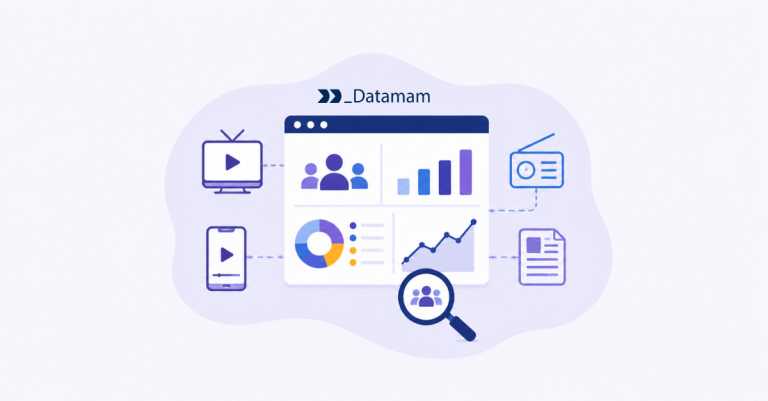
Audience intelligence systems depend on external media signals that move across streaming platforms, social channels, search behavior, publisher ecosystems, connected TV, podcasts, gaming environments, and advertising networks. Internal analytics remain essential, but they rarely show the full audience market. A media company may know its own views, watch time, subscribers, churn, and campaign performance, while still lacking structured visibility into competitor content momentum, cross-platform consumption patterns, creator influence, or audience trend data. Media Data Sourcing gives media companies, agencies, publishers, streaming platforms, and brand teams a structured way to monitor external media signals and convert them into audience intelligence.
The Audience Visibility Gap in Fragmented Media Markets
Media consumption is no longer concentrated in a small number of predictable channels. Audiences move across streaming services, short-form video, connected TV, live sports, podcasts, newsletters, social feeds, gaming platforms, and creator-led communities. PwC’s Global Entertainment & Media Outlook 2025-2029 frames the industry as one where advertising growth, digital formats, AI-enabled content models, and changing consumer spending are reshaping media economics.
This fragmentation creates a visibility gap. Owned analytics show performance inside one organization’s ecosystem, but they do not fully reveal where audience attention is moving externally. A series may underperform because of weak creative fit, but it may also be competing against a major platform release, sports event, creator trend, or shifting format preference. Media Data Sourcing closes this gap by collecting external audience and content signals continuously.
Why Internal Platform Data Does Not Show the Full Audience Market
Internal platform data is valuable because it shows how audiences interact with owned content. Streaming platforms can measure completion rates, session duration, churn, search activity, and recommendations. Publishers can track pageviews, subscriptions, scroll depth, and newsletters. Agencies can measure campaign delivery and engagement. However, these datasets reflect only the organization’s own environment.
They do not show competitor content performance, external platform rankings, creator-driven attention, social conversation, search interest, podcast movement, or audience behavior across other media channels. As a result, teams may misinterpret performance. A decline in views may reflect weaker content, but it may also reflect broader audience migration, genre fatigue, platform saturation, or an unusually competitive release window.
How External Audience Signals Improve Media Decision-Making
External audience signals help media teams understand attention formation beyond owned channels. These signals can include trending content lists, platform rankings, social engagement, creator mentions, search interest, app store reviews, podcast charts, streaming availability, advertising placements, review volume, and cross-platform discussion. When organized into audience intelligence, these signals help teams evaluate whether a content asset is gaining momentum, losing relevance, or being affected by external competition.
In practice, Media Data Sourcing improves decision timing. Programming teams can understand genre movement earlier. Marketing teams can identify campaign resonance beyond paid channels. Strategy teams can track competitor positioning. Advertising teams can align inventory and audience segments with current consumption behavior.
External Data as an Audience Intelligence Layer
Media Data Sourcing becomes valuable when it creates a repeatable audience intelligence layer rather than a collection of one-off trend reports. Audience intelligence systems need audience measurement data, media consumption data, content performance data, and audience trend data organized around commercial decisions. This layer does not replace first-party analytics, panel measurement, or brand research. Instead, it strengthens those functions by adding external market context.
Cross-platform measurement is becoming more important as ad-supported streaming, broadcast, and cable compete for attention. While organizations should rely on primary measurement agreements for official buying decisions, the broader market signal is clear: audience measurement increasingly requires multiple data types and platform views.
Monitoring Audience Measurement Data Across Platforms
Audience measurement data appears across TV ratings, streaming rankings, connected TV reports, publisher analytics, podcast charts, social video metrics, app store signals, and advertising platforms. Each source measures audience behavior differently. A view, stream, impression, completion, listen, engagement, or share may represent different levels of attention and value.
A structured sourcing pipeline can collect and classify audience measurement data across formats, markets, and time periods. This allows teams to monitor audience movement beyond owned dashboards. It also helps analysts detect whether attention is moving by platform, genre, demographic segment, geography, creator network, or content format.
Tracking Media Consumption Data Across Channels and Formats
Media consumption data helps teams understand how audiences allocate attention across formats. A consumer may watch long-form streaming at night, follow short-form video during the day, listen to podcasts during commuting, and engage with sports content during live events. These patterns affect programming, campaign timing, and distribution strategy.
Continuous media data monitoring can track consumption signals across video, audio, text, gaming, social, and live formats. In practice, this helps organizations understand whether audiences are shifting toward short clips, live experiences, creator-led content, premium long-form, or ad-supported environments. The value comes from seeing directional behavior before internal performance metrics fully reflect the shift.
Interpreting Content Performance Data for Programming Strategy
Content performance data becomes useful when it is interpreted with context. A show, article, video, podcast, or creator campaign may generate high engagement because of strong quality, algorithmic boost, controversy, paid promotion, cultural timing, or competitor weakness. Isolated metrics rarely explain the cause.
Media Data Sourcing helps connect performance signals across sources. Teams can compare rankings, search activity, social discussion, review sentiment, release timing, platform availability, and competitor activity. This allows programming and marketing teams to evaluate whether performance is durable, event-driven, format-specific, or inflated by short-term attention.
Infrastructure Requirements for Media Data Sourcing
Media Data Sourcing depends on infrastructure that can collect, normalize, validate, and deliver external audience signals into programming, marketing, advertising, and strategy workflows. The goal is not simply to collect more media metrics. Teams need decision-ready intelligence that connects content, platforms, formats, audience segments, dates, geographies, and competitive context. Deloitte’s Digital Media Trends 2025 provides useful context on changing consumer behavior across streaming, social media, gaming, and digital entertainment.
Media datasets are especially difficult because platforms define metrics differently. A media intelligence system must preserve source definitions and collection context so analysts can compare signals responsibly.
Continuous External Data Collection Across Media Sources
Media-relevant sources include streaming rankings, app stores, social platforms, publisher websites, podcast directories, YouTube channels, creator networks, ad libraries, review platforms, search signals, press coverage, and competitive content catalogs. These sources differ in structure, frequency, accessibility, and metric definitions. Continuous collection systems use APIs, scheduled crawlers, browser automation, feed ingestion, and change detection to capture updates.
At scale, this enables teams to monitor audience measurement data, media consumption data, content performance data, and audience trend data without relying on manual research. Continuous collection is especially useful during launches, campaign flights, sports seasons, awards cycles, breaking news events, and fast-moving cultural moments.
Normalizing Platforms, Content, Formats, and Audience Metrics
External media data is rarely comparable in raw form. One platform reports views, another reports streams, another reports impressions, and another reports engagement rate. Content titles may differ by region. Episodes, clips, trailers, articles, podcasts, and creator posts may represent different forms of the same campaign. Geographies, categories, and audience segments may also be defined differently.
Normalization aligns content identifiers, platform names, format types, release dates, regions, metric definitions, engagement types, and source metadata. Without this layer, audience intelligence can produce misleading comparisons. Reliable media market analysis depends on consistent definitions before insights are drawn.
Validating Media Data Before Audience Analysis
Validation is essential because media signals are noisy. Platform rankings can change quickly. Social engagement can be inflated by bots, paid amplification, controversy, or platform algorithm changes. Publisher metrics may be affected by homepage placement or syndication. Content catalogs may change due to licensing windows.
Data quality controls should identify duplicate records, stale feeds, missing fields, abnormal engagement spikes, inconsistent timestamps, title mismatches, and source structure changes. Validation should occur before external data enters audience dashboards, campaign reports, content planning tools, or executive market reviews.
Technology Stack Behind Audience Intelligence Systems
Audience intelligence systems operate as coordinated data pipelines rather than isolated dashboards. They must collect external media signals, process them into comparable datasets, store historical observations, and preserve governance evidence. The stack must support both broad market monitoring and high-frequency tracking for strategic launches, competitor releases, campaigns, and platform changes.
In enterprise environments, these systems should integrate with BI dashboards, content planning workflows, campaign reporting, data warehouses, and audience analytics platforms. Media Data Sourcing becomes commercially useful when external signals are connected to the decisions that programming, marketing, and advertising teams already make.
Collection and Orchestration Using Playwright, Airflow, and Kafka
Collection layers may use Playwright or headless Chromium to capture data from dynamic media pages, rankings, catalogs, ad libraries, review pages, and creator platforms where APIs are limited or unavailable. Apache Airflow can orchestrate recurring collection jobs, retries, dependencies, launch trackers, and source quality checks. Kafka can support streaming ingestion when social signals, campaign events, or content performance changes need rapid downstream processing.
This stack helps teams move from manual trend checking to repeatable media intelligence operations. It also supports consistent collection windows, which matter when comparing audience trend data across platforms and time zones.
Processing and Transformation Through Spark, dbt, and Media ETL Pipelines
Processing layers transform raw media signals into structured datasets. Spark can support the distributed processing of large volumes of content metadata, engagement records, rankings, comments, reviews, ad observations, and historical trend data. dbt can manage standardized transformation logic, documentation, and analytical models for audience, content, and campaign intelligence.
Media ETL and ELT pipelines can map content titles, classify formats, normalize platform metrics, detect duplicates, connect clips to parent titles, calculate momentum indicators, and aggregate performance by market or audience segment. This makes audience intelligence repeatable rather than dependent on analyst screenshots and manual spreadsheets.
Storage, Analytics, and Governance in Snowflake, BigQuery, or Databricks
Structured audience intelligence datasets are commonly stored in Snowflake, BigQuery, or Databricks, where analysts can query historical trends, content performance, competitor movement, and campaign impact. Dashboards can support programming reviews, marketing optimization, ad sales narratives, audience development, and executive planning.
Governance controls should include access permissions, audit logs, data lineage, source documentation, retention policies, and role-based controls. These controls matter because audience intelligence can influence licensing decisions, advertising commitments, campaign spend, editorial strategy, and content investment. Travel data analysis methods for airlines enable carriers to refine their operations and enhance customer experience. By leveraging advanced analytics, airlines can identify patterns in passenger behavior and optimize pricing strategies accordingly. These insights ultimately drive revenue growth and improve flight efficiency, benefiting both the airline and its clientele.
Commercial Impact of Media Data Sourcing
The commercial value of Media Data Sourcing appears when external audience visibility improves programming, marketing, advertising, and strategy decisions. Better intelligence can help teams detect trend movement earlier, benchmark content performance more accurately, identify platform-specific audience behavior, and respond faster to competitor momentum. The outcome is not guaranteed audience growth. It is a stronger decision timing, better market context, and less dependence on incomplete internal views.
Audience intelligence is especially valuable when markets move quickly. A creator trend, viral clip, sports event, platform change, or major release can redirect attention within hours. Continuous sourcing helps teams identify which movements are meaningful and which are temporary noise.
Improving Programming and Content Strategy with Audience Evidence
Programming decisions improve when teams can compare owned performance against broader audience trend data. If a genre is gaining attention externally but underperforming internally, teams can investigate whether the issue is distribution, positioning, creative fit, or audience mismatch. If competitor content gains momentum, teams can examine format, release timing, talent, theme, platform support, and audience response.
Media Data Sourcing gives programming teams external evidence for slate planning, acquisition, renewal, packaging, and release strategy. It does not replace editorial judgment. It improves the evidence base behind those decisions.
Supporting Advertising and Campaign Planning with Market Context
Advertising and campaign planning depend on knowing where audiences are spending attention. Content performance data, platform rankings, social engagement, and search interest can help teams evaluate which audiences are active, which formats are resonating, and which cultural moments are forming. This supports media planning, creative sequencing, influencer selection, and campaign timing.
For ad sales teams, external audience intelligence can also strengthen market narratives. Sales teams can connect inventory, content momentum, and audience behavior with broader media consumption data, helping buyers understand why certain placements or content environments are strategically relevant.
Reducing Manual Research Across Media and Strategy Teams
Media analysts often spend significant time checking rankings, collecting social metrics, monitoring competitor catalogs, reviewing platform trends, and compiling campaign screenshots. Continuous data pipelines reduce this workload by standardizing collection, classification, normalization, and recurring reporting.
The operational value is consistency. When different teams use different sources, collection windows, definitions, or ranking snapshots, audience analysis becomes fragmented. Structured sourcing gives programming, marketing, research, and strategy teams a shared evidence base. Data sourcing strategies for enterprises are crucial for maintaining data integrity across various departments. Effective collaboration fosters improved decision-making and more accurate insights. By implementing robust data sourcing strategies, organizations can streamline workflows and enhance their overall analytical capabilities.
Risk Exposure When Audience Intelligence Is Incomplete
Incomplete audience intelligence creates commercial and strategic risk. Teams may misread content performance, miss platform shifts, overinvest in declining formats, underinvest in emerging audience behavior, or respond late to competitor momentum. In media markets, delayed visibility can affect release strategy, campaign efficiency, licensing decisions, ad sales positioning, and audience retention.
The risk is not simply missing a trend. It is building strategic decisions on partial audience visibility. Media Data Sourcing reduces this risk by making audience behavior more observable, comparable, and traceable across platforms.
Delayed Detection of Audience Trend Shifts
Audience trend shifts can appear externally before they appear in owned performance dashboards. A genre may gain traction on social platforms before streaming performance changes. A creator format may reshape audience expectations before formal campaign metrics reflect it. A competitor release may dominate attention before internal engagement declines.
Continuous monitoring helps teams detect these shifts earlier. Audience trend data can show whether a movement is growing across multiple platforms, isolated to one channel, or driven by a temporary promotion. This supports faster content, marketing, and distribution response.
Misreading Content Performance Without External Context
Content performance data can be misleading when viewed only internally. A title may appear weak because its owned metrics declined, but the broader genre may be declining as well. Conversely, a title may appear strong because of paid promotion or platform placement, while organic audience momentum is weaker. Without external context, teams may overvalue or undervalue content assets.
External media consumption data helps teams compare performance against market conditions. This makes it easier to separate content-specific issues from broader audience behavior and platform-level effects.
Governance Gaps in Media Data Collection and Use
Media data can create governance challenges if sources, metric definitions, collection windows, and transformation logic are not documented. Audience intelligence may influence programming investments, campaign budgets, and advertiser-facing claims. If the data cannot be reproduced or explained, confidence declines.
Governance controls should document source approval, metric definitions, collection cadence, validation checks, data lineage, and access rights. This is especially important when external audience intelligence supports high-value commercial decisions or external reporting.
Governance Requirements for Audience Intelligence Systems
Audience intelligence systems must be governed because they influence commercial strategy, advertising commitments, content investment, and customer targeting. Media data may come from public pages, platform APIs, social metrics, ad libraries, rankings, review sites, and commercial feeds. Each source carries different reliability levels, usage constraints, and interpretation risks.
NIST’s AI Risk Management Framework provides a strong governance reference for AI-enabled decision systems, emphasizing measurement, management, transparency, and accountability. These principles apply when audience intelligence systems use automated collection, classification, prediction, or AI-assisted analysis.
Source Documentation, Access Controls, and Audit Logs
Audience intelligence datasets should include clear documentation of source, metric definition, update frequency, coverage, data owner, and known limitations. Access controls should restrict sensitive campaign analysis, competitor intelligence, audience segmentation outputs, and advertiser-facing reports. Audit logs should record who accessed, transformed, exported, or used audience datasets.
These controls help teams demonstrate that content and advertising decisions are based on approved sources and consistent analytical methods. They also reduce the risk that sensitive audience or competitive intelligence is distributed too broadly.
Data Lineage Across Audience, Content, and Campaign Datasets
Data lineage allows teams to understand how each media signal moved from source to analysis. Traceability should cover content identifier, platform, metric, timestamp, geography, collection method, transformation logic, validation result, and dashboard publication. This matters because audience assumptions can be challenged by executives, advertisers, partners, or internal research teams.
Lineage also supports debugging. If a content ranking or engagement metric appears wrong, teams can determine whether the issue came from source data, title matching, collection timing, bot activity, platform change, or transformation logic.
Cross-Platform Data Considerations in Media Intelligence
Media intelligence often crosses platforms, countries, languages, formats, and data definitions. A view on one platform is not equivalent to a stream, impression, completion, download, listen, or pageview on another. Regional availability, content licensing, translation, platform algorithms, and audience demographics also affect comparability.
Cross-platform controls should document metric definitions, platform limitations, regional coverage, language handling, and permitted use. This reduces the risk that audience intelligence becomes analytically attractive but commercially misleading.
Evaluating Media Data Sourcing Readiness
Media Data Sourcing becomes valuable when it supports repeatable audience decisions, not simply when external metrics exist. Readiness depends on source coverage, content matching quality, metric normalization, collection frequency, validation controls, governance, and integration with commercial workflows. Teams should evaluate whether external intelligence supports the platforms, formats, markets, and audience segments that matter most.
A readiness review helps identify where audience visibility is delayed, where media consumption data is unreliable, and where teams still depend on manual trend monitoring.
How Media Teams Assess Audience Data Quality
A structured assessment should evaluate platform coverage, content matching accuracy, metric completeness, source reliability, update frequency, geography coverage, format classification, duplicate rates, and historical continuity. It should also review missing metadata, abnormal engagement spikes, bot exposure, title matching quality, and validation workflows.
For audience intelligence, data quality must be evaluated in commercial terms. A dataset may contain millions of records while still lacking the audience measurement data, content performance data, or audience trend data needed to support programming, campaign, or ad sales decisions.
When Organizations Need an Audience Intelligence Infrastructure Review
An infrastructure review becomes useful when teams rely on manual trend checks, disconnected spreadsheets, inconsistent platform metrics, fragmented vendor feeds, or unclear content matching rules. The review should assess intake workflows, source coverage, normalization logic, validation controls, storage architecture, lineage tracking, governance posture, and integration readiness.
The output should clarify where data risk accumulates, where audience intelligence may be incomplete, and which infrastructure improvements would make media data more reliable for programming, advertising, and strategy teams. Effective construction data management strategies are essential for minimizing errors and enhancing collaboration among various stakeholders. By establishing clear protocols and standardized processes, teams can ensure consistent data quality and accessibility. Moreover, integrating advanced analytics within these strategies can significantly improve decision-making and project outcomes.
Conclusion: Media Data Sourcing as Audience Intelligence Infrastructure
Media markets are fragmented, fast-moving, and increasingly shaped by external audience signals. Internal platform analytics remain essential, but they are not sufficient for understanding audience measurement data, media consumption data, content performance data, and audience trend data as they develop across the wider media ecosystem. Media Data Sourcing gives organizations a structured way to convert external signals into audience intelligence.
Ultimately, organizations that treat media data as governed audience intelligence infrastructure will be better positioned to identify audience shifts earlier, evaluate content performance with context, support advertising decisions, and make faster, more defensible media strategy decisions.