Key Takeaways
- Data Quality Ownership determines whether enterprise data issues can be resolved at scale.
- A data ownership model clarifies who owns source accuracy, business meaning, pipeline controls, and data product reliability.
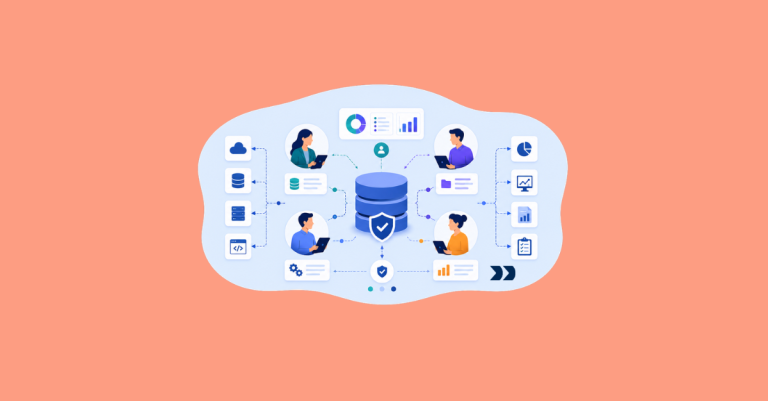
- Data stewardship connects business domains, engineering teams, governance functions, and platform operations.
- A data quality ownership framework helps teams separate detection, root cause, remediation, and prevention.

Data quality ownership becomes difficult when enterprise data moves across applications, data pipelines, business domains, platforms, analytics environments, AI systems, and operational workflows. A defect may originate in a source application, appear in a data warehouse, affect an AI feature set, surface in a dashboard, and create confusion for a business team that has no control over the upstream process. In complex systems, quality problems rarely belong to one team by default.
Data Quality Ownership refers to the accountability structure used to assign responsibility for data quality across domains, systems, pipelines, platforms, data products, governance functions, and downstream consumers. It includes a data ownership model, data stewardship, data quality ownership framework, source ownership, domain accountability, remediation workflows, metadata, lineage, auditability, validation, observability, and executive governance.
Data Quality Ownership Determines Whether Enterprise Data Issues Can Be Resolved at Scale
Enterprise data systems are interconnected. Customer data may begin in CRM, flow through identity resolution, land in Snowflake or BigQuery, transform through dbt, support customer 360 reporting, feed churn models, and appear in revenue operations dashboards. Product data may begin in catalog systems, move through Spark or Databricks workflows, support pricing analytics, feed recommendation systems, and inform marketplace intelligence.
When quality issues appear, accountability is often unclear. Engineering teams may own pipeline execution but not business definitions. Business teams may own meaning but not validation rules. Source-system teams may control upstream capture but not downstream impact. Governance teams may define policy but not remediate operational defects.
McKinsey’s State of AI 2025 shows that AI adoption is broad, but many organizations remain early in scaling enterprise-level value. That gap matters because AI systems depend on owned, reliable, traceable data products. Without quality ownership, AI workflows inherit ambiguity from the data systems that feed them.
A Data Ownership Model Clarifies Who Owns Source Accuracy, Business Meaning, Pipeline Controls, and Data Product Reliability
A data ownership model clarifies responsibility across the full data lifecycle. Source owners should be accountable for the accuracy and completeness of data captured in operational systems. Domain owners should define business meaning, accepted values, critical fields, and decision relevance. Data engineering teams should implement validation, transformation, orchestration, monitoring, and delivery controls. Data product owners should manage reliability, lifecycle, usage, and downstream impact.
This separation matters because no single team can own every quality dimension. Engineering can detect schema violations, but business owners must confirm whether a field reflects the right definition. Governance can define access rules, but domain teams must understand whether usage is appropriate. Platform teams can provide observability, but data stewards must coordinate remediation.
In practice, ownership creates a map of responsibility. It prevents quality issues from moving through the organization as unresolved tickets.
Data Stewardship Connects Business Domains, Engineering Teams, Governance Functions, and Platform Operations
Data stewardship is the coordination layer between ownership and execution. Stewards help translate business quality expectations into operating rules. They coordinate issue triage, remediation, documentation, escalation, and governance evidence. They also ensure that recurring quality issues are treated as root-cause problems rather than isolated defects.
A steward may help define quality rules for customer identity, product completeness, supplier coverage, revenue classification, or external data normalization. The steward does not necessarily own every system involved. However, the steward ensures that owners, engineers, governance teams, and consumers are aligned on what must happen.
Accordingly, stewardship is not administrative overhead. It is the operating function that makes quality accountability work across complex systems.
Why Data Quality Breaks Down Across Complex Systems
Data quality breaks down across complex systems because responsibility is distributed while impact is consolidated. A defect may be created upstream, transformed downstream, consumed by multiple tools, and discovered by a business user far from the source. By the time the issue becomes visible, teams may disagree about where ownership begins and ends.
Gartner’s 2025 Data and Analytics Predictions highlight that failures in synthetic data management can create AI governance, model accuracy, and compliance risk. The broader lesson applies to enterprise quality ownership: as data is reused in more advanced systems, unclear accountability becomes a larger source of risk. Implementing data governance best practices for enterprises can help clarify roles and responsibilities, reducing confusion around data ownership. By establishing clear guidelines, organizations can ensure that data quality is maintained throughout its lifecycle. This proactive approach not only minimizes risk but also enhances trust in the data being used for critical business decisions.
Data Quality Issues Persist When Ownership Is Split Across Applications, Pipelines, Domains, and Downstream Consumers
Data quality issues persist when each team owns only a narrow part of the system. A CRM team may say the data was entered as provided. A data engineering team may say the pipeline processed records correctly. An analytics team may say the metric is inconsistent. A governance team may say policy requires review. A business team may say the output is unusable.
Each statement may be true, but the issue remains unresolved because no ownership framework connects them. This is especially common in customer 360, product intelligence, financial reporting, risk monitoring, supply chain analytics, and external data programs.
At scale, fragmented ownership creates recurring defects. Teams fix symptoms, but upstream capture rules, business definitions, validation standards, and remediation paths remain unchanged.
A Data Quality Ownership Framework Helps Teams Separate Detection, Root Cause, Remediation, and Prevention
A data quality ownership framework separates the stages of quality management. Detection identifies that a problem exists. Root-cause analysis identifies where and why it occurred. Remediation corrects the issue. Prevention changes the upstream process, rule, control, or ownership model so the issue does not return.
Without this separation, teams often confuse detection with resolution. A Great Expectations check may identify missing values. A dbt test may detect broken transformation logic. A Prometheus alert may show freshness delay. However, detection alone does not define who must fix the cause or prevent recurrence.
A practical ownership routing model can clarify responsibility:
def route_quality_ownership(issue):

    if issue["root_cause"] == "source_entry_error":

        return {"owner": "source_system_owner", "action": "correct_upstream_process"}


    if issue["root_cause"] == "business_definition_conflict":

        return {"owner": "data_domain_owner", "action": "approve_standard_definition"}


    if issue["root_cause"] == "pipeline_transformation_error":

        return {"owner": "data_engineering", "action": "repair_pipeline_logic"}


    if issue["root_cause"] == "policy_or_access_exception":

        return {"owner": "data_governance", "action": "review_permitted_use"}


    if issue["root_cause"] == "unclassified_quality_gap":

        return {"owner": "data_steward", "action": "coordinate_triage"}


    return {"owner": "quality_governance_board", "action": "escalate_for_decision"}


issue = {

    "dataset_id": "customer-360-profile",

    "root_cause": "business_definition_conflict",

    "affected_systems": ["retention_dashboard", "churn_model"],

}


route_quality_ownership(issue)
This pattern shows that ownership must follow root cause, not only where the issue was discovered.
The Strategic Cost of Weak Data Quality Ownership
Weak data quality ownership creates strategic cost because defects remain unresolved longer, recur more often, and create uncertainty across critical systems. The enterprise may have validation tools, dashboards, data catalogs, and governance policies, but without ownership, teams still struggle to decide who is accountable for quality outcomes.
IBM’s 2025 CDO Study emphasizes that advanced analytics and AI require high data quality and a strong governance framework. Ownership is the mechanism that connects those requirements to action. Quality and governance cannot operate at scale if no team owns decisions, remediation, and lifecycle control. Data quality challenges in governance can lead to significant operational inefficiencies. It is crucial for organizations to create clear lines of accountability and assign specific teams to tackle these challenges. By fostering a culture of ownership, businesses can ensure that data quality remains a priority and governance frameworks can be effectively implemented.
Business Teams Lose Trust When No Clear Owner Can Explain or Resolve Data Defects
Business teams lose trust when no clear owner can explain or resolve defects. A revenue dashboard changes, but no one can confirm whether the definition changed. A product dataset lacks required attributes, but no owner can decide whether the catalog process or pipeline rule must change. A customer profile has duplicates, but ownership is split between CRM, data engineering, and analytics.
This uncertainty slows decisions. Teams must escalate questions, compare outputs, and wait for clarification. Over time, business users build local workarounds because the official data system feels unreliable.
Ultimately, weak ownership increases the cost of confidence. Users need someone accountable not only for the data existing, but for the data being fit for purpose.
AI, Analytics, Reporting, and Compliance Programs Become Exposed When Quality Accountability Is Unclear
AI, analytics, reporting, and compliance programs become exposed when quality accountability is unclear. A model may depend on a feature table that no one owns as a business product. A compliance report may require lineage that no team has maintained. A dashboard may use a metric that lacks approved definition ownership. A risk feed may rely on external data whose sourcing controls are unclear.
The NIST AI Risk Management Framework emphasizes governance, mapping, measurement, and management across AI systems. These functions depend on accountable data ownership because AI risk cannot be managed effectively when the ownership of input data, quality controls, and downstream impact is unclear.
In this context, ownership is not a documentation exercise. It is a risk control.
How Ownership Improves Enterprise Data Quality Management
Ownership improves enterprise data quality management by clarifying who defines quality, who enforces controls, who remediates issues, and who prevents recurrence. It also clarifies which data products deserve higher levels of investment based on business criticality.
A customer dataset used for executive reporting and AI scoring requires stronger ownership than an exploratory dataset used by one analyst. A finance data product used for board reporting requires stricter controls than a temporary operational extract. A third-party market dataset used for pricing decisions requires sourcing and usage ownership, not only technical validation.
Domain Owners Define Meaning While Engineering Teams Enforce Validation, Monitoring, and Delivery Controls
Domain owners define business meaning. They determine what a customer status means, which product attributes are required, how supplier risk should be classified, which revenue categories are approved, and which external data fields are suitable for business decisions.
Engineering teams enforce those expectations through pipelines, schema validation, dbt tests, Great Expectations checks, Airflow quality gates, transformation logic, observability rules, and data delivery controls. Platform teams provide the underlying systems: Snowflake, BigQuery, Databricks, Spark, Kafka, metadata repositories, lineage tools, and monitoring systems.
By contrast, when domain meaning and engineering controls are disconnected, quality deteriorates. The pipeline may be technically valid while the business meaning remains wrong. Ownership closes that gap.
Data Stewards Coordinate Quality Rules, Issue Triage, Remediation Workflows, and Governance Evidence
Data stewards coordinate the operating process around quality. They help convert domain expectations into measurable rules, monitor recurring issues, coordinate remediation between teams, and maintain governance evidence.
A steward might track whether critical fields meet completeness thresholds, whether duplicate records are decreasing, whether source-system fixes were implemented, whether downstream consumers were notified, and whether quality exceptions were documented.
A simple stewardship workflow can make issue triage repeatable:
def assign_stewardship_action(quality_event):

    if quality_event["severity"] == "critical" and quality_event["consumer_type"] == "executive_reporting":

        return {"action": "escalate_immediately", "owner": "data_steward"}


    if quality_event["recurrence_count"] >= 3:

        return {"action": "open_root_cause_review", "owner": "data_steward"}


    if quality_event["requires_definition_change"]:

        return {"action": "schedule_domain_review", "owner": "data_domain_owner"}


    if quality_event["requires_pipeline_fix"]:

        return {"action": "send_to_engineering_backlog", "owner": "data_engineering"}


    return {"action": "monitor", "owner": "quality_operations"}


quality_event = {

    "dataset_id": "supplier-risk-feed",

    "severity": "critical",

    "consumer_type": "executive_reporting",

    "recurrence_count": 2,

    "requires_definition_change": False,

    "requires_pipeline_fix": True,

}


assign_stewardship_action(quality_event)
This pattern shows how stewardship turns ownership into operational response.
The Infrastructure Layer Behind Data Quality Ownership
Data quality ownership requires infrastructure that makes accountability visible. Ownership cannot rely only on spreadsheets, policy documents, or informal knowledge. Teams need systems that connect quality events to owners, definitions, lineage, downstream consumers, audit logs, remediation actions, and governance decisions.
Metadata systems show who owns a dataset, what it means, how it is classified, how often it refreshes, and which use cases are approved. Lineage tools show upstream sources, transformations, and downstream dependencies. Observability systems show whether data is fresh, complete, valid, and behaving normally. Audit logs show who changed what, when, and why.
Metadata, Lineage, Observability, Audit Logs, and Exception Routing Make Ownership Operational
Metadata makes ownership discoverable. Lineage makes impact visible. Observability makes defects measurable. Audit logs make decisions traceable. Exception routing makes accountability actionable.
Together, these capabilities allow teams to answer practical questions. Who owns this data product? Which source created the defect? Which dashboards and models are affected? Also, which quality rule failed? Who approved the definition? Was the issue remediated? Did it recur?
Without this infrastructure, ownership remains theoretical. With it, ownership becomes part of how the data platform operates.
Great Expectations, dbt, Airflow, Spark, Snowflake, BigQuery, Databricks, Prometheus, and Metadata Systems Support Accountable Quality Operations
Great Expectations can validate schema, completeness, uniqueness, ranges, and business rules. dbt can test transformations and document models. Airflow can orchestrate quality gates and dependency checks. Spark can support large-scale profiling and processing. Snowflake, BigQuery, and Databricks can support governed analytical environments. Prometheus and data observability systems can monitor freshness, latency, failures, and anomalies. Metadata systems connect quality signals to ownership and governance context.
However, these tools do not create accountability automatically. A failed validation check still needs an owner. A broken transformation still needs root-cause review. A stale pipeline still needs incident response. A recurring defect still needs prevention.
Therefore, accountable quality operations require both tooling and ownership standards.
Governance, Compliance, and External Data Risk Depend on Ownership
Governance and compliance depend on quality ownership because sensitive and regulated data requires clear accountability. Customer data, employee data, financial records, healthcare information, third-party data, and external datasets all require controls around quality, usage, access, retention, sourcing, and auditability.
External data introduces additional ownership challenges. Teams must understand where the data came from, how it was collected, what usage rights apply, how frequently it refreshes, how it is normalized, and whether cross-border considerations apply. A dataset can be technically valid while still being inappropriate for a specific use case if sourcing or permitted-use controls are unclear.
Ownership Makes Governance Decisions Traceable
Ownership makes governance decisions traceable. If a dataset is approved for reporting but not for AI training, that decision should be attached to the data product. If access is granted to a domain team, approval should be recorded. Also, if a third-party dataset has usage restrictions, ownership should include responsibility for enforcing those limits.
This matters for auditability. When data is challenged, teams need to show who approved use, which quality checks passed, which exceptions occurred, and which downstream systems were affected.
Accordingly, data quality ownership is part of compliance architecture. It connects policy to operational responsibility.
Cross-System Ownership Reduces Risk in High-Change Environments
High-change environments create more ownership risk. Source applications change schemas. Business teams redefine categories. Vendors alter file formats. External data sources shift coverage. New AI workflows consume existing datasets in new ways. Data products move from exploratory use to operational dependency.
Cross-system ownership reduces this risk by defining who must approve changes and who must be notified. It also helps teams decide whether a change is technical, semantic, regulatory, or operational.
In practice, this prevents quality issues from spreading silently through complex systems.
Why Data Quality Ownership Is Becoming an Executive Governance Issue
Data Quality Ownership is becoming an executive governance issue because enterprise decisions increasingly depend on data that crosses many systems and teams. Leaders rely on data for AI, analytics, finance, compliance, risk monitoring, customer intelligence, market visibility, supply chain operations, and executive reporting.
Executives do not need to manage every quality rule. However, they need visibility into which domains, products, and systems lack clear quality accountability. They also need to know which recurring issues are caused by missing ownership, which data products support critical decisions, and which governance risks remain unresolved. Data quality solutions for enterprises can help bridge the gaps in data governance. By implementing robust frameworks, organizations can ensure consistent data integrity across their operations. This proactive approach not only enhances decision-making but also mitigates risks associated with poor data quality.
Leaders Need Visibility Into Which Data Domains, Products, and Systems Lack Clear Quality Accountability
Leadership visibility should focus on ownership gaps. Which critical data products lack owners? Which domains have recurring defects? Also, which systems create upstream quality issues? Which datasets feed production AI without clear accountability? Which external data sources lack sourcing ownership? Also, which reporting assets lack approved definitions? Which compliance workflows lack lineage ownership?
This visibility helps leaders prioritize intervention. Some ownership gaps require domain accountability. Others require stewardship, platform controls, governance escalation, or source-system process changes.
In this context, ownership becomes a signal of enterprise readiness. If no one owns quality, no one can reliably improve it.
Scalable Data Programs Require Ownership Standards, Stewardship Models, Governance Roadmaps, and Continuous Review
Scalable data programs require ownership standards. These standards should define source ownership, domain accountability, stewardship responsibilities, data product ownership, remediation ownership, access approval, quality threshold ownership, and lifecycle review.
They also require stewardship models that coordinate issue triage and prevention. Governance roadmaps should prioritize the highest-impact ownership gaps first: customer data, product data, finance data, risk data, external data, AI feature datasets, and executive reporting assets.
Ultimately, Data Quality Ownership determines whether enterprise quality issues can be resolved at scale. A data ownership model clarifies responsibility for source accuracy, business meaning, pipeline controls, and data product reliability. Data stewardship coordinates quality rules, issue triage, remediation, and governance evidence. A data quality ownership framework separates detection, root cause, remediation, and prevention.
Organizations that build clear ownership into complex data systems will resolve quality issues faster, reduce recurrence, and strengthen trust in AI, analytics, reporting, and operations. Those that leave ownership ambiguous will keep discovering the same defects across different systems, with no clear accountability for preventing them from returning.