Key Takeaways
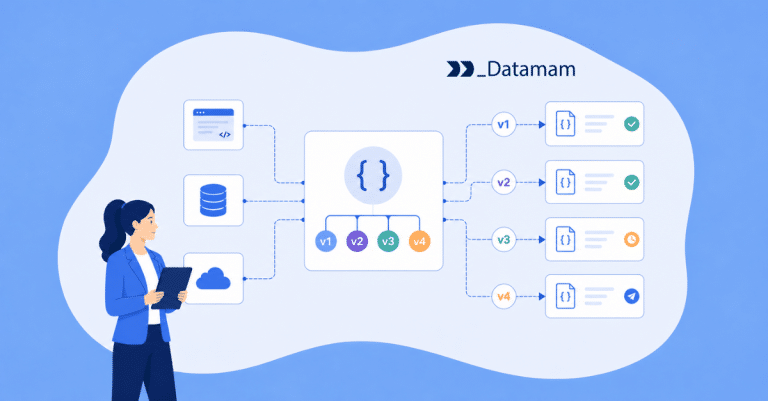
- API Version Control helps enterprises evolve APIs without breaking downstream systems, applications, workflows, data pipelines, and reporting layers.
- An API versioning strategy should define how versions are named, released, supported, deprecated, and retired.
- A version change policy separates breaking changes from non-breaking changes so integration teams can plan migrations safely.
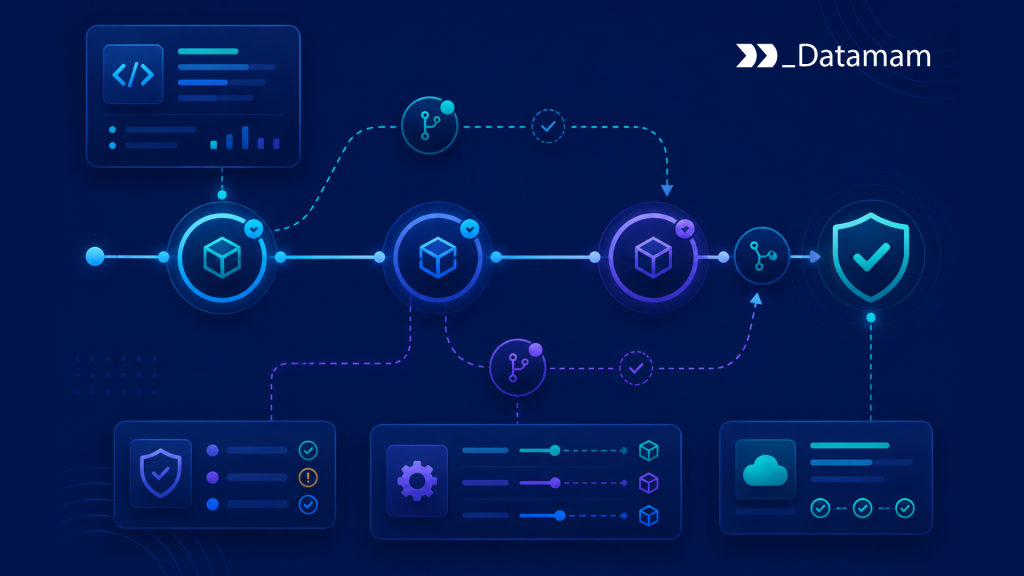
- API release management protects consumers by coordinating rollout timing, compatibility testing, migration windows, and rollback paths.
- Stable API version control requires ownership, audit trails, consumer tracking, version documentation, and governance review.
Enterprise integrations become fragile when API versions change without control. A producer team may introduce a new response structure, remove a legacy field, rename an endpoint, change an error format, or retire an old version before consumers are ready. The API may appear technically improved, but downstream systems can fail if they depend on older behavior.
API Version Control creates the operating model for managing API changes safely. It defines how versions are released, how consumers migrate, how backward compatibility is maintained, and how deprecated versions are retired.
In enterprise integration programs, version control is not simply naming an endpoint v1 or v2. It is a governance and reliability capability that protects ERP, CRM, warehouse, BI, AI, payment, marketplace, supply chain, product, and customer systems from uncontrolled interface change.
Why API Version Control Matters in Enterprise Integration
API Version Control matters because APIs are shared integration assets. One API may serve several consumers with different release cycles, risk profiles, and operational dependencies. A marketplace connector may update weekly. A finance workflow may change quarterly. A partner integration may require long notice periods. An AI feature pipeline may depend on stable fields for model consistency.
Deloitte’s guidance on API governance for agentic AI argues that API strategy and governance are necessary for standardizing how APIs are designed, published, reused, and controlled as enterprise systems and AI workflows scale. Version control is one of the practical controls that makes that governance operational.
Why API Change Creates Integration Risk
API change creates risk because producers and consumers rarely move at the same speed. A producer may be ready to release a cleaner endpoint. Consumers may still depend on legacy fields, older status values, or previous response structures. If the producer changes the API without migration planning, the consumer absorbs the failure.
This risk is especially high when APIs support operational processes. A payment API change can affect transaction reconciliation. A product API change can affect marketplace publishing. A customer API change can affect CRM, billing, support, and analytics workflows. A booking API change can affect inventory, availability, and customer experience.
API Version Control reduces this risk by making changes predictable. It defines what type of change requires a new version, when consumers must migrate, and how long older versions remain supported.
How Weak Version Control Breaks Downstream Systems
Weak version control creates downstream instability. Consumers may receive unexpected fields, missing values, changed status codes, or new error structures. Some systems fail immediately. Others continue running while producing incorrect outputs.
This is where versioning becomes a reliability issue. A BI dashboard may not fail but may classify new values incorrectly. A data warehouse ingestion job may accept a new schema but lose historical consistency. An AI feature pipeline may receive changed semantics under the same field name, creating model drift.
Gartner’s 2025 Magic Quadrant for API Management states that AI is creating new security and governance demands for resilient API ecosystems. Version governance is part of that resilience because every API ecosystem must manage change without destabilizing consumers.
API Versioning Strategy for Enterprise Systems
An API versioning strategy defines how APIs evolve. It should address naming, compatibility, support for Windows, release sequencing, consumer migration, and retirement rules.
The strategy should be consistent across the API portfolio. If every team versions APIs differently, consumers face unnecessary complexity and integration risk.
Defining Version Names, Support Windows, and Compatibility Rules
Version names should be clear and predictable. Some enterprises use path-based versions such as /v1/customers. Others use headers, media types, or contract versions. The specific method matters less than consistency and governance.
Support windows define how long each version remains available. Critical consumers may require longer windows. Internal low-risk APIs may migrate faster. Partner-facing or revenue-critical APIs often require stronger notice and longer support.
Compatibility rules define what can change within a version. Adding an optional response field may be compatible. Removing a required field is not. Changing a field’s business meaning may be breaking even if the data type stays the same.
Separating Breaking and Non-Breaking API Changes
Breaking changes should trigger a formal version review. These include removed fields, renamed fields, changed data types, changed required fields, changed authentication requirements, changed error structures, and altered business meaning.
Non-breaking changes may include adding optional fields, improving metadata, expanding documentation, or adding new endpoints without affecting existing behavior. However, some changes that look non-breaking technically can still affect operations. Adding a new enum value, for example, may break consumer logic if the consumer assumes a fixed value list.
A versioning strategy should define both technical and operational breakage. This prevents producers from assuming that all parser-safe changes are business-safe.
Aligning Version Strategy with Consumer Risk
Not all consumers carry the same risk. A test dashboard may tolerate rapid change. A payment workflow, order management process, customer-facing application, or regulated report may require strict control.
Version strategy should account for consumer criticality. High-risk consumers may need compatibility testing, longer migration periods, release previews, rollback paths, and direct notification. Lower-risk consumers may use standard release notes and shorter windows.
This prevents API release management from becoming either too slow for all teams or too risky for critical systems.
Version Change Policy Across API Programs
A version change policy translates strategy into operating rules. It defines who approves changes, how impact is assessed, how consumers are notified, and when a new version is required.
The policy should be clear enough for producer teams to follow and strong enough to protect downstream consumers.
Classifying Version Changes Before Release
Every API change should be classified before release. The classification should identify whether the change is backward compatible, breaking, deprecated, security-driven, urgent, or experimental.
A simple internal policy check may look like this:
API_CHANGE_POLICY = {
    "breaking_changes": ["remove_field", "rename_field", "change_data_type", "change_auth_scope"],
    "review_required": ["add_required_field", "change_error_format", "change_enum_values"],
    "non_breaking_changes": ["add_optional_field", "update_description", "add_metadata"],
}


def classify_api_change(change):
    change_type = change.get("change_type")

    if change_type in API_CHANGE_POLICY["breaking_changes"]:
        return {"release_path": "new_version_required", "approval": "architecture_review"}

    if change_type in API_CHANGE_POLICY["review_required"]:
        return {"release_path": "consumer_impact_review", "approval": "data_governance"}

    if change_type in API_CHANGE_POLICY["non_breaking_changes"]:
        return {"release_path": "standard_release", "approval": "api_owner"}

    return {"release_path": "manual_review", "approval": "integration_lead"}
This follows the same structure as the snippets you shared: a policy object, a small function, and clear routing based on business-safe conditions. The purpose is not to show production code. It shows how version change policy can become executable release logic.
Creating Consumer Notification and Migration Rules
Consumer notification should be tied to change severity. A non-breaking update may require release notes. A breaking change should require direct notification, migration guidance, test environment access, and a retirement timeline.
Migration rules should define what consumers need to do and by when. They should also define how the producer tracks migration status. For critical integrations, a producer should know which consumers are still using the old version before retirement.
A weak migration process leaves producers guessing. A strong process makes consumer readiness visible.
Managing Emergency Version Changes
Some version changes are urgent. Security vulnerabilities, compliance issues, exposed sensitive fields, or critical production defects may require faster action than normal migration windows allow.
Emergency changes still need governance. The policy should define who can approve emergency release, which consumers must be notified, what temporary compatibility protections are available, and how post-release review will occur.
NIST’s guidance on API protection for cloud-native systems notes that enterprise IT systems rely on APIs for integration that supports organizational business processes, and that secure API deployment requires identifying risks across the API life cycle. Emergency version handling is part of that life-cycle control because security and operational stability must be balanced.
API Release Management for Stable Integrations
API release management controls how new versions move from design to production. It should include testing, documentation, staging, consumer validation, deployment, monitoring, and rollback planning.
A release is not stable only because the API deploys successfully. It is stable when consumers can continue operating safely. Api dependency impacts on businesses in various ways. If an API has frequent changes or instability, it can lead to disruptions for consumers, affecting their operations and overall satisfaction. Ensuring that APIs are robust and well-managed is essential for maintaining a competitive edge in today’s technology-driven market.
Coordinating Release Windows Across Consumers
Enterprise consumers often operate on different calendars. Finance systems may avoid changes during close. Retail systems may avoid changes during seasonal peaks. Partner integrations may require contractually defined notice. AI workflows may require model validation when input structures change.
API release management should coordinate release windows with consumer impact. A producer should not release a breaking API version during a critical consumer process unless the change is urgent and approved.
Release coordination also includes staging access. Consumers should be able to test new versions before production use. This reduces surprises at cutover.
Testing Version Compatibility Before Production
Compatibility testing should validate old and new versions against consumer expectations. Tests should confirm required fields, error structures, authentication behavior, pagination, status values, and response timing.
A version rollout check may look like this:
API_RELEASE_RULES = {
    "required_checks": ["schema_test", "consumer_test", "rollback_plan"],
    "blocked_statuses": ["consumer_test_failed", "rollback_missing"],
}


def approve_api_release(release):
    missing = [check for check in API_RELEASE_RULES["required_checks"] if check not in release.get("completed_checks", [])]

    if missing:
        return {"approved": False, "reason": "missing_release_checks", "checks": missing}

    if release.get("status") in API_RELEASE_RULES["blocked_statuses"]:
        return {"approved": False, "reason": "blocked_release_status"}

    if release.get("consumer_migration_status") != "ready":
        return {"approved": False, "reason": "consumer_migration_not_ready"}

    return {"approved": True}
This snippet mirrors the validation style from your previous cluster: required checks, blocked conditions, and a clear approval result. It keeps the article practical without turning the section into a programming guide.
Planning Rollback and Parallel Version Support
Rollback planning should be defined before release. If a new version causes consumer failures, teams need to know whether they can revert, route consumers back to the old version, or run versions in parallel.
Parallel support is common in enterprise API environments. Version 1 may remain active while version 2 is adopted. During this period, producers must monitor both versions and avoid inconsistent behavior across them.
The goal is controlled transition. A new version should not force all consumers to migrate immediately unless the risk of keeping the old version is greater than the migration risk.
Contract Version Management and API Governance
API Version Control is closely related to contract governance. Each API version represents a contract between producer and consumer. The contract defines structure, behavior, expectations, and support terms.
Version governance ensures that these contracts remain visible and enforceable.
Connecting Version Control to API Contract Structure
Each API version should have a documented contract. That contract should include endpoint behavior, request schema, response schema, authentication requirements, error handling, rate limits, version status, support window, and deprecation plan.
This prevents version numbers from becoming superficial labels. A version should represent a known interface state. Consumers should know exactly what they are integrating against.
Deloitte’s API governance guidance emphasizes standardized API design, publishing, reuse, and lifecycle practices as enterprises scale APIs into more advanced operating environments. API contract versioning is the mechanism that keeps those practices consistent across producer and consumer teams.
Managing Deprecated Versions and Retirement Windows
Deprecation should be managed as a controlled lifecycle stage. A deprecated version should remain available for a defined period unless security or compliance risk requires accelerated retirement.
The deprecation notice should include replacement version, migration guidance, support end date, breaking changes, consumer testing instructions, and escalation contact. Usage should be monitored until consumers migrate.
Retirement should occur only after active consumers are identified and the migration path is confirmed. Otherwise, retirement can create avoidable incidents.
Tracking Consumer Adoption Across Versions
Consumer adoption tracking shows which applications, teams, partners, or workflows use each version. This tracking is critical before deprecation and retirement.
A producer should be able to answer: Who is still using v1? Which workflows depend on it? Which consumers failed migration testing? Also, which consumers need escalation? Which version supports critical operations?
Without consumer tracking, version retirement becomes risky. With tracking, release management becomes evidence-based.
Operational Controls for API Version Reliability
Operational controls ensure that version policies are followed in production. They detect unsupported versions, unexpected consumer behavior, failed migrations, and version-related incidents.
These controls should connect API gateways, logs, catalogs, observability systems, and governance records.
Monitoring Version Usage, Errors, and Migration Status
API monitoring should track version usage by consumer, endpoint, request volume, error rate, latency, and migration status. This helps teams detect consumers who remain on deprecated versions or experience issues after migrating.
Version-level monitoring is important because a new version may work for most consumers but fail for a specific workflow. Aggregate API health may look normal while one critical consumer is affected.
Monitoring should also show unsupported version requests. If retired versions are still being called, teams need to know whether the calls come from internal systems, external partners, old jobs, or misconfigured clients.
Preventing Unsupported Version Access
Unsupported versions should not remain reachable indefinitely without control. Once a version is retired, calls should be blocked, redirected, or handled through an approved exception path.
However, blocking should be coordinated. Sudden enforcement without consumer review can create outages. A stronger approach is to monitor deprecated use, notify consumers, set a retirement date, provide migration support, and then enforce blocking.
Version access control should be tied to the API gateway, consumer registry, and release management process.
Technology and Integration Considerations
API Version Control requires systems that can publish versions, route requests, enforce policies, track consumers, and record release history.
The technology layer should make the version state visible. Teams should not have to search code repositories, gateway configurations, and spreadsheets to understand which version is active.
Using API Gateways, Catalogs, CI/CD, and Observability Tools
API gateways can route traffic by version, enforce access policies, monitor deprecated use, and block retired versions. API catalogs can document version status, owner, support window, and migration instructions. CI/CD pipelines can run compatibility checks before deployment. Observability tools can track version usage, latency, error rates, and consumer behavior.
These systems should work together. A new version should not be released unless documentation, tests, consumer impact review, and rollback planning are complete. A deprecated version should not retire unless usage monitoring confirms readiness or an approved exception exists.
This turns API release management into a controlled workflow rather than a manual release note.
Connecting API Versions to Warehouses, BI, AI, and Lineage Systems
API versions often affect downstream data systems. A warehouse table may be populated from API v1. A BI dashboard may depend on v2 fields. An AI feature pipeline may require stable meaning across versions. A lineage system should show which version produced which downstream asset.
Version metadata should be preserved where possible. Request logs, ingestion tables, data products, and model feature stores should know which API version supplied the data. This helps teams debug incidents and evaluate migration impact.
Without version lineage, downstream teams may not know that a reporting change or model issue was caused by API version migration. Effective API schema strategies are essential for ensuring consistency across different versions. Teams should prioritize clear documentation and versioning practices to minimize confusion. By implementing robust API strategies, organizations can enhance collaboration and improve data quality across their systems.
Governance and Auditability in API Version Control
Governance defines who owns version decisions, who approves breaking changes, how consumers are notified, and how retirement is audited.
The OECD’s work on data governance frames governance as the technical, policy, and regulatory structures required to manage data across its value cycle. API Version Control fits this model because API versions shape how data moves, changes, and remains accountable across enterprise systems.
Creating Ownership, Review Cycles, and Escalation Paths
Each API should have a version owner. Ownership should include technical responsibility, business-domain accountability, and governance oversight where the API supports critical workflows.
Review cycles should occur when new versions are proposed, breaking changes are planned, deprecated versions approach retirement, or consumers raise compatibility issues. High-impact APIs should receive more formal review than low-risk internal endpoints.
Escalation paths should define who resolves migration delays, consumer objections, emergency releases, and unsupported version calls. This prevents API version control from becoming a negotiation during incidents. API integration for efficient workflows is essential for ensuring that all systems communicate effectively. By establishing clear protocols and responsibilities, organizations can minimize downtime and enhance productivity. This collaborative approach not only streamlines processes but also fosters innovation across teams.
Maintaining Audit Trails for Version Changes and Releases
Audit trails should capture version creation, release approvals, schema changes, compatibility checks, consumer notifications, migration status, deprecation dates, retirement approvals, and rollback actions.
Auditability matters when version changes affect operational systems, AI workflows, reporting, compliance processes, or external partners. Teams should be able to show which version was active, why it changed, who approved it, and which consumers were affected.
API version history becomes evidence that integration change was controlled, not improvised.
Conclusion: Turning API Versioning into Controlled Integration Infrastructure
API Version Control helps enterprises evolve APIs without destabilizing connected systems. It defines api versioning strategy, version change policy, api release management, migration windows, support terms, and retirement rules.
Strong version control separates breaking and non-breaking changes, coordinates releases with consumers, tests compatibility, supports rollback, tracks adoption, and preserves audit evidence. It protects ERP, CRM, warehouse, BI, AI, payment, marketplace, supply chain, product, and customer systems from uncontrolled interface change.
The capability matters because APIs are shared operational contracts. When versions are managed informally, every change can become an integration risk. When versions are governed, monitored, and auditable, API integration becomes a stable enterprise infrastructure layer.
A structured review can help evaluate whether current API workflows have reliable API Version Control, api versioning strategy, version change policy, api release management, and audit-ready version governance. You can run an external data infrastructure audit with our team to review your current setup and understand what is required to build reliable, enterprise-scale API integration infrastructure.